
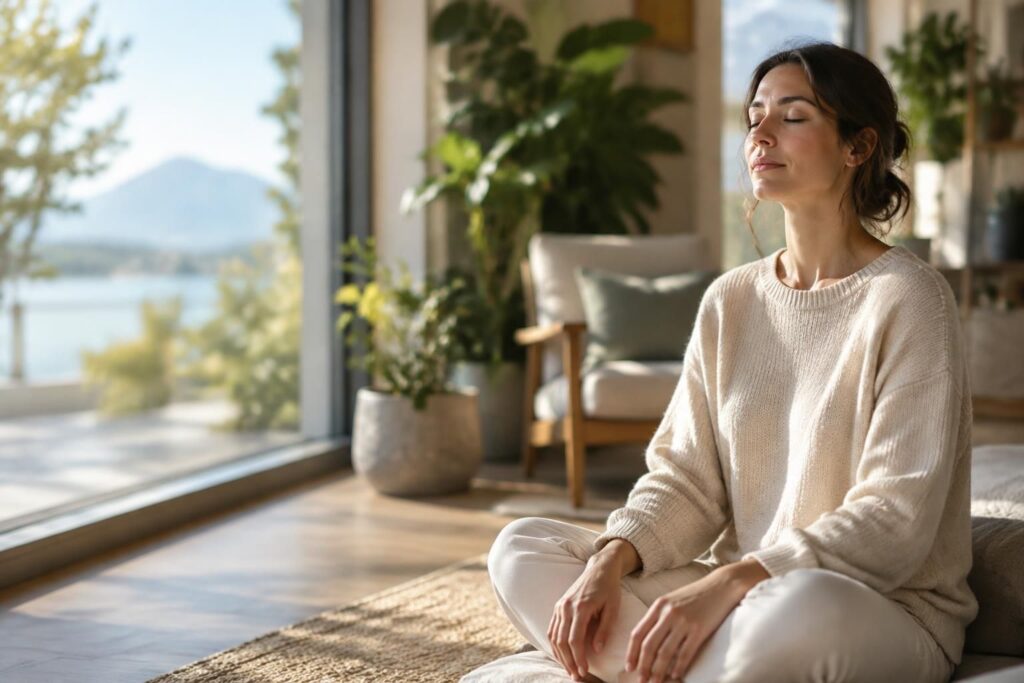
Introduction
Hi, Patrick here. Yes, ten minutes can be enough to ease the pressure in the moment, especially with slow breathing or sensory grounding. This break won’t solve the underlying causes of ongoing stress on its own, but it can offer a genuine moment of calm. The simplest approach: choose one method, practice it without aiming for perfection, and notice what changes.
Try now: 5 simple steps
- Place your feet on the floor and unclench your jaw.
- Breathe out slowly, without forcing it or holding your breath.
- Name five things you can see around you.
- Relax your shoulders with each exhale.
- Choose a short practice to repeat tomorrow.
Try now: give yourself a 10-minute break, even if your thoughts keep coming and going. For a gentle routine, also check out ten-minute relaxation yoga and this guided relaxation to ease stress.
Relaxation in 10 minutes: what you can really expect
A short practice can reduce the sense of urgency and help your body gradually come out of alert mode. You may notice deeper breathing, less raised shoulders, or a mind that feels a little more present.
But stress management isn’t just about a quick exercise. If the pressure comes from prolonged overload, ten minutes can help you recover in the moment, without replacing rest, a change of pace, or appropriate support.
One phrase to keep in mind: “Calm is cultivated, not commanded.” The goal isn’t to empty your mind, but to give it something to hold on to.
Which method should you choose for quick relaxation?
The best technique depends on how you feel. Controlled breathing often works well when tension rises quickly; gentle movement may feel better if stress is settling in your neck or back.
| What you need right now | Technique | Suggested duration |
|---|---|---|
| Rising pressure | Slow exhale or adapted 4-7-8 breathing | 2 to 5 minutes |
| Racing thoughts | 5-4-3-2-1 sensory grounding | 2 to 3 minutes |
| Physical tension | Gentle stretches or muscle relaxation | 5 to 10 minutes |
| A need to reconnect with yourself | Guided meditation or body scan | 5 to 10 minutes |
These durations are guidelines, not requirements. If an exercise feels uncomfortable, shorten it or choose a different approach: relaxation shouldn’t become a performance.
Deep breathing: slow down without forcing it
Sit comfortably and first let your breath follow its natural rhythm. Then gently lengthen your exhale without trying to fill your lungs as much as possible.
4-7-8 breathing may suit some people, but holding your breath isn’t essential. If you feel dizzy or uncomfortable, return to normal breathing; deep breathing should feel gentle and comfortable.
Heart coherence is another option: breathing at a slow, steady pace for a few minutes can help you find a more stable rhythm. You don’t need an app—a timer is enough.
When thoughts take up all the space
Try sensory grounding: identify five things you can see, four physical sensations, three sounds, two smells, and one taste. This approach brings your attention back to your immediate surroundings rather than the scenario running on repeat in your mind.
Mental calm doesn’t mean all your thoughts disappear. You can simply let them pass while bringing your attention back to a concrete sensation, like your feet on the floor.
A three-step process to wind down
- Step 1: Settle into a stable position and relax your face, jaw, and shoulders.
- Step 2: For a few minutes, gently lengthen your exhale or do the 5-4-3-2-1 exercise.
- Step 3: Finish with a slow movement of your neck and shoulders, then notice what has changed.
This sequence offers quick relaxation without any equipment. If you need an audio guide, choose a short guided meditation and keep the volume low.
If you’re experiencing a surge of stress or physical tension
If you’re experiencing a sudden surge of stress, start with a slow exhale and sensory grounding. If you’re dealing with physical tension, opt for easy movements and gradual muscle relaxation, without tensing a painful area.
A simple example: before a meeting, someone takes two minutes to feel their feet on the floor and slow their breathing. The meeting doesn’t change, but they go into it feeling less rushed.
A 10-minute routine to try
Start with one minute to settle in and feel your points of support. Then spend three minutes breathing slowly, followed by four minutes scanning your body, from your feet up to your face.
Use the last two minutes to gently stretch your neck and shoulders, or simply sit quietly. This routine can support emotional recovery after a busy day, especially if you do it regularly.
If staying still makes you more uncomfortable, walk slowly while paying attention to the feeling of your feet touching the floor. The right practice is one you can return to without apprehension.
Frequently asked questions about relaxation in 10 minutes
Are ten minutes enough to calm stress?
Often, about ten minutes can reduce the tension you feel and help you gain a little perspective. The effect depends on the person and the situation; chronic stress may require more comprehensive support.
Which technique should I choose when I’m very tense?
First try a slow exhale or sensory grounding. If breathing feels uncomfortable, return to natural breathing and focus on the sensations around you.
Should I practice every day?
Regular practice helps make the exercise more familiar. A few minutes repeated several times a week are often easier to stick with than a long session now and then.
What should I do if relaxation increases my anxiety?
Stop the exercise and open your eyes. Focus your attention on the room, move gently, or ask a professional for advice if this reaction happens repeatedly or your anxiety is severe.
Thanks for your interest. See you soon; Patrick