
Introduction
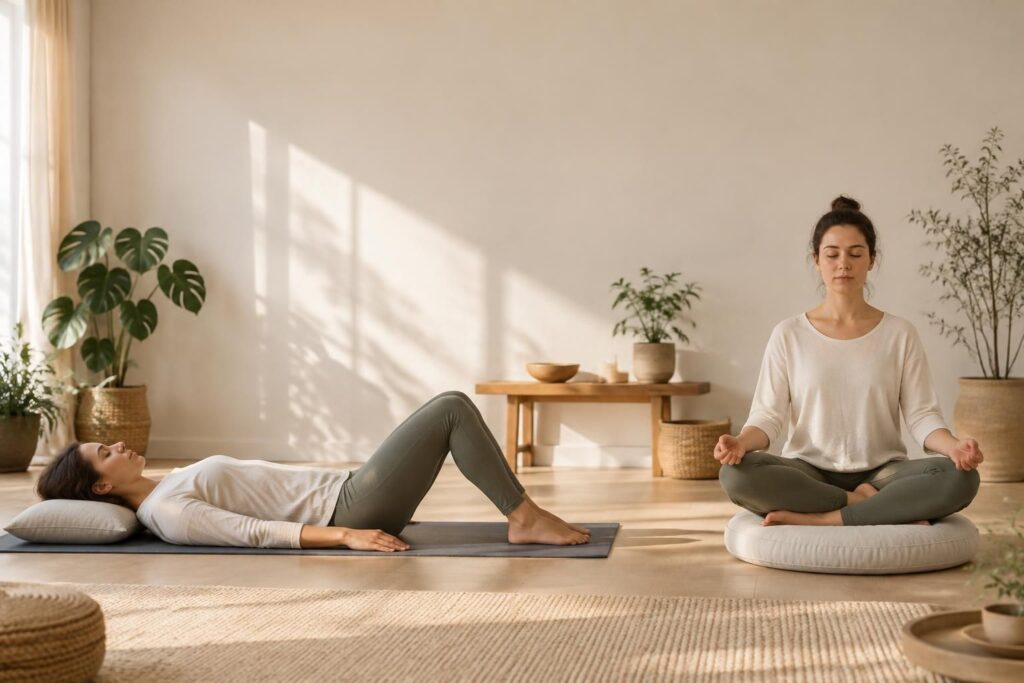
Hi, this is Patrick. Sitting often helps you stay attentive; lying down can make it easier for your body to release tension. To choose, start with what you need: to focus or recover. In my article, you’ll find a simple comparison, easy exercises, and a method for trying both positions. The key is to choose a comfortable position and not push yourself.
Try this right now:
- Choose a quiet place where you can stay for a few minutes.
- Sit with your feet flat on the floor, or lie down with your neck supported.
- Relax your shoulders and unclench your jaw.
- Breathe gently, without trying to take deep breaths.
- Stop or change position if you feel any pain.
To get started, try each position for two to five minutes, depending on your situation. These simple pointers on relaxing while standing or lying down and short exercises to calm your body can help you choose without putting pressure on yourself.
Sitting or lying down to relax: which position should you choose?
Sitting relaxation works well if you want to stay alert, meditate, or do breathing exercises during a break. Keep your back supported, but avoid stiffening up: a relaxing posture should remain comfortable.
Lying-down relaxation may feel more pleasant when you’re tired, tense, or uncomfortable sitting for a long time. It can sometimes make it easier to relax your muscles, but it may also make you feel like sleeping. So the right choice depends on how you feel at the time, not on a universal rule.
As a simple saying puts it: “The best posture is the one that lets you stay comfortable and breathe freely.” If pain or discomfort arises, change position.
| Need | Position that often works well | What to watch out for |
|---|---|---|
| Stay attentive and meditate | Sitting, feet flat on the floor | Avoid tensing your back and shoulders |
| Release tension after a busy day | Lying down, legs comfortably supported | You may fall asleep if you’re exhausted |
| Calm restlessness before bed | Lying down or sitting on the edge of the bed | Choose a position that doesn’t worsen any discomfort |
Two quick ways to decide
If you want to refocus without falling asleep, choose a sitting position and pay attention to your breathing. If you’re very tired or sitting is uncomfortable, try lying down with a pillow under your knees.
Three steps for trying breathing exercises
Breathing exercises can be done sitting or lying down. The goal isn’t to breathe perfectly, but to slow down a little and notice the sensations in your body.
- Step 1: Settle into the position you’ve chosen and observe your breathing for a few moments without changing it.
- Step 2: Breathe in gently through your nose, then let your exhale last a little longer if that feels comfortable.
- Step 3: Continue for a few minutes. When you’re done, move your hands and feet, then return to your activities at your own pace.
Once, after a busy day, someone tried meditating while sitting and could only think about how tired they were. When they lay down with their legs supported, they were able to relax their shoulders and follow their breathing more calmly: that position simply suited what they needed at the time.
Comparing positions: stay present or release tension
This comparison of positions mainly shows two tendencies, not a fixed hierarchy. Sitting can make it easier to maintain steady attention; lying down lets your body settle. In both cases, a short meditation or muscle-relaxation exercise can support stress management and well-being.
If you want to switch things up, start sitting to breathe, then lie down to notice areas of tension. Conversely, you can end a lying-down session sitting up to ease back into activity. This alternation is often more useful than trying to find the perfect position.
When to adjust your relaxation posture
Discomfort in your back, hips, or knees can make a position difficult to maintain. Add a pillow or choose another position; there’s no need to stay still at all costs. If the pain persists or gets worse, ask a healthcare professional for advice.
To explore relaxation techniques further, you can also use simple exercises and choose a method suited to your daily life. Start small: a few minutes regularly may be easier to maintain than a long session now and then.
Frequently asked questions about sitting and lying-down relaxation
Does lying-down relaxation help you relax more?
It can make physical relaxation easier, especially when you’re tired. But if you fall asleep or find it harder to concentrate, sitting may work better for you.
Can you meditate while lying down?
Yes. Get comfortable and gently focus on your breathing or sensations. If you consistently fall asleep, try a sitting position.
How long should I practice?
Start with two to five minutes, depending on your situation. You can gradually extend the time if the position remains comfortable and your breathing feels natural.
What should I do if slow breathing makes me uncomfortable?
Return to your usual pace and simply observe your breathing without trying to control it. You can also open your eyes or stop the exercise.
Thank you for your interest. See you soon; Patrick