
Hello, it’s Patrick.
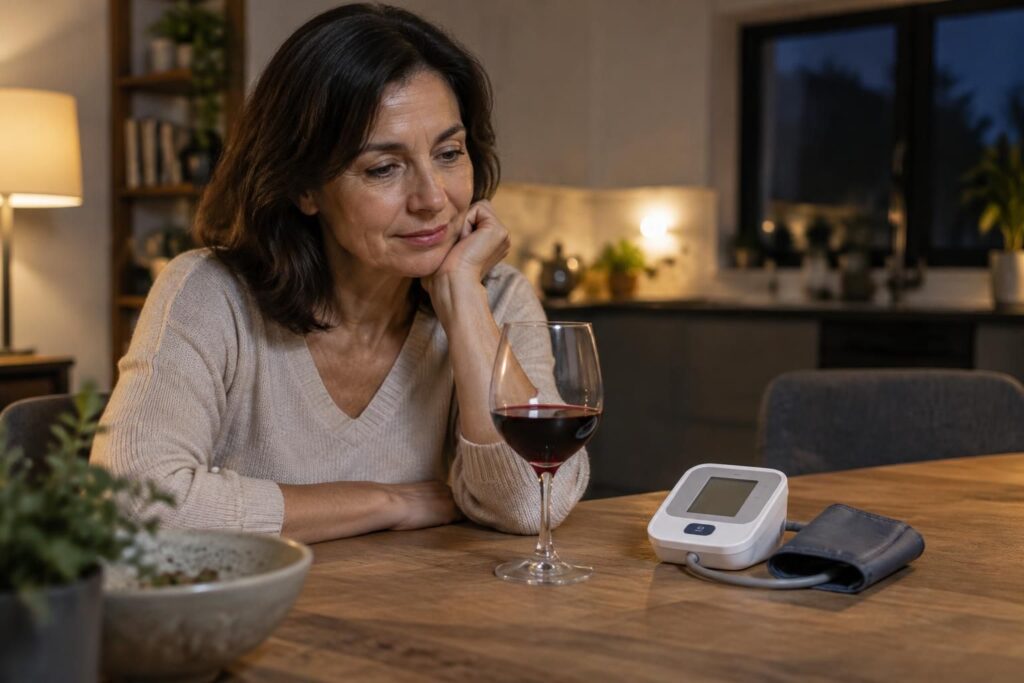
An evening drink doesn’t treat high blood pressure: alcohol can actually raise it, especially if consumed regularly or in large quantities.
An alcoholic drink can create a temporary feeling of relaxation. But that feeling doesn’t mean it benefits your heart or arteries.
Here’s how to understand the risk and choose helpful steps, without feeling guilty or replacing medical care.
What to do right away
- Don’t drink alcohol to lower your blood pressure or help you fall asleep.
- If you drink, keep track of how much and when for a few days.
- Avoid measuring your blood pressure right after a drink: alcohol can affect the reading.
- Choose water or a non-alcoholic drink in the evening.
- If you’re taking medication, ask your doctor or pharmacist for advice before changing your habits.
To work on several habits at once, you can read these tips on managing high blood pressure day to day and find out what to drink in the evening without contributing to high blood pressure.
Alcohol in the evening and blood pressure: misleading relief
The main trap is confusing relaxation with cardiovascular benefits. Alcohol can initially affect circulation and create a feeling of warmth or relaxation, but it isn’t a reliable way to lower blood pressure.
Over the longer term, repeated or heavy drinking is associated with higher blood pressure. The effect of alcohol on blood pressure depends in particular on the amount consumed, how often you drink, your health, and the medications you take.
Alcohol and high blood pressure: quantity matters
A standard drink contains about 10 grams of pure alcohol. Beer, wine, and spirits are served in different volumes, but can contain a similar amount of alcohol when they each count as one standard drink.
French low-risk drinking guidelines recommend no more than 2 drinks per day and 10 per week, with alcohol-free days. These are limits intended to reduce risk, not a drinking target or a guarantee of no health effects.
| Evening habit | Possible effect | Helpful response |
|---|---|---|
| An occasional drink | May temporarily affect readings and sleep | Avoid turning it into a remedy or an obligatory ritual |
| Several drinks frequently | May contribute to higher blood pressure | Cut back gradually and ask for advice if needed |
| Alcohol before bed | May help you fall asleep, then disrupt your sleep | Choose an alcohol-free routine to support restful sleep |
Alcohol before bed: sleep doesn’t necessarily benefit
Alcohol can make you feel as though you’re falling asleep faster. Yet alcohol and sleep rarely go well together: your sleep may become more fragmented and less restorative, with awakenings or a feeling of fatigue in the morning.
Imagine Marc, who has a drink to “unwind.” He falls asleep quickly, but wakes several times and measures high blood pressure the next day. This reading doesn’t prove that the drink is the only cause; it does, however, highlight the value of looking at your habits as a whole.
Alcohol consumption and cardiovascular health can’t be summed up by a reading taken after an evening out. Sleep, stress, diet, physical activity, and medications also play a role in your overall health.
Diet and blood pressure: replace rather than compensate
When it comes to diet and blood pressure, it’s better to focus on lasting habits than to compensate for alcohol with a perfect diet the next day. An alcohol-free evening, a balanced meal, and regular physical activity are simple choices, but repeating them makes a difference.
To cut back on alcohol for your blood pressure, start by identifying the situations that prompt you to have a drink: stress, meals, boredom, or difficulty falling asleep. Sparkling water with lemon, herbal tea, or a non-alcoholic drink can replace the habit, without claiming to treat high blood pressure.
Three steps to take stock without putting pressure on yourself
- Keep track for a week. Note what you drink, how much, when, and how you sleep. The goal is to spot a pattern, not to judge yourself.
- Try an alternative. On some evenings, replace your alcoholic drink with a non-alcoholic option and plan a calming routine, such as a short walk or some quiet time.
- Talk it over with a professional. If your blood pressure is often high, you’re taking medication, or you’re finding it difficult to cut back, talk to a doctor or pharmacist.
To measure your blood pressure at home, follow a healthcare professional’s instructions and use a suitable device. A single reading isn’t enough to make a diagnosis; however, consistently high readings warrant medical advice.
Preventing high blood pressure: signs that call for action
High blood pressure doesn’t always cause obvious symptoms. So don’t rely only on a headache or feeling unwell to tell whether your blood pressure is normal: regular checks, when recommended, are more useful.
If you experience chest pain, significant shortness of breath, sudden weakness on one side of the body, or sudden trouble speaking, call emergency services. These signs need prompt assessment, regardless of alcohol consumption.
Preventing high blood pressure means taking a broad view: eating habits, sleep, physical activity, smoking, stress, and alcohol. The key is not to use an alcoholic drink in the evening as a treatment for blood pressure.
Frequently asked questions about evening alcohol and blood pressure
Does a glass of wine in the evening lower blood pressure?
No. A temporary feeling of relaxation doesn’t mean that blood pressure drops in the long term. Alcohol can actually contribute to raising it, especially when consumed often or in large quantities.
Do you have to stop drinking alcohol completely if you have high blood pressure?
What you should do depends on your health, your drinking habits, and your medication. Talk to a healthcare professional, who can advise you on a safe and appropriate reduction.
Does alcohol before bed help you sleep better?
It may help some people fall asleep, but it can also disrupt sleep. It isn’t recommended as a sleep aid.
When should you seek advice about high blood pressure?
If your readings are consistently high, make an appointment with a healthcare professional. If you have chest pain, significant shortness of breath, or sudden neurological symptoms, call emergency services.
Thanks for reading! If this topic resonates with you, share your experience in the comments. — Patrick