
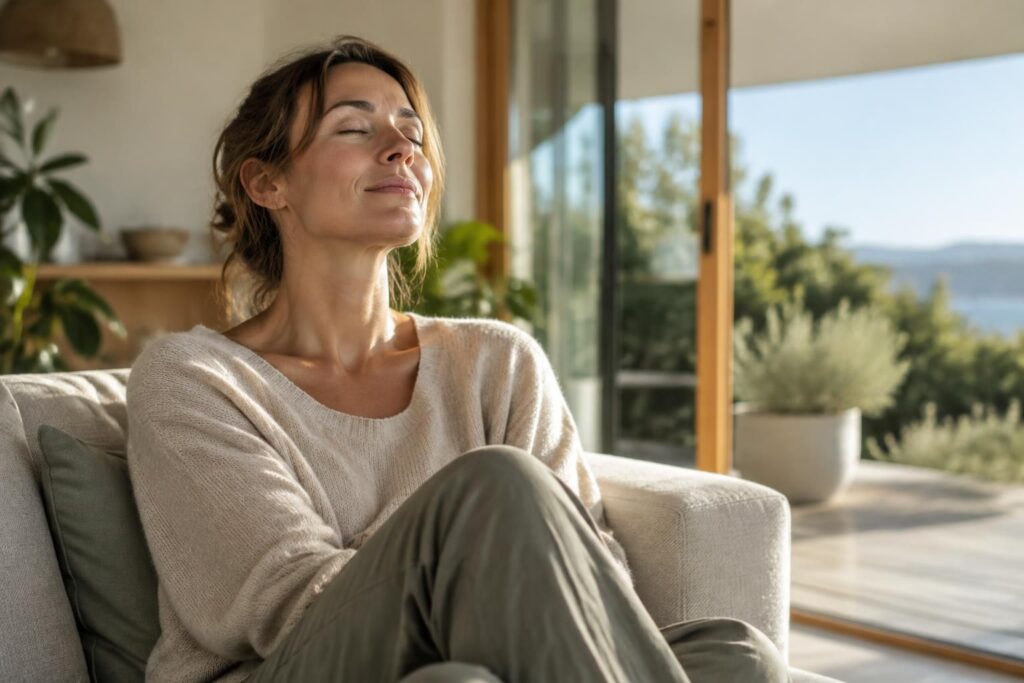
Hi there, it’s Patrick. Calming your mind doesn’t guarantee you’ll avoid illness, but it can support your physical health by reducing the burden of chronic stress. Prevention also involves healthy lifestyle habits and kindly paying attention to your inner signals. A few simple steps can help you restore a better mind-body balance, without replacing medical care.
Try these now
- Slowly lengthen your exhale for one minute, without forcing your breathing.
- Relax your shoulders and jaw by checking where your body is holding tension.
- Walk for a few minutes, if your condition allows, paying attention to your steps.
- Reduce one source of overload today: notifications, a non-urgent task, or screen time before bed.
- Talk to someone you trust if your worries become difficult to carry alone.
When everything feels overwhelming, a relaxation technique suited to stressful moments can help you find a little breathing room. You can also explore grounding exercises to return to the present moment, without trying to make all your thoughts disappear.
The stress trap we eventually come to see as normal
A stressful period does not automatically lead to illness. But when pressure sets in, sleep, mood, and daily habits can become more fragile. We move less, sometimes eat in a hurry, and put off asking for help: it’s often this buildup that deserves attention.
Managing stress is therefore not a promise of absolute protection. It is one form of support among others, alongside appropriate physical activity, a balanced diet, rest, and preventive care recommended by a professional.
The body sometimes sends subtle signals
Imagine Samira, who ends her days with tense shoulders and wakes up several times during the night. Rather than concluding that she has an illness, she can note these changes, ease her pace when possible, and talk to a professional if the symptoms persist or worsen.
A new, intense, or persistent symptom should not automatically be attributed to stress. Relaxation can support prevention, but it does not replace a diagnosis or treatment.
How relaxation can support your physical health
When you feel threatened or under pressure, your body mobilizes its resources to cope. This response is useful in the short term. If it keeps recurring without a break, it can make rest and recovery—both important elements of well-being—more difficult.
Meditation, comfortable breathing, or a slow movement won’t cure an illness on their own. However, they can offer a pause, encourage self-awareness, and gradually build resilience in the face of everyday demands.
| Action | What it can support | Keep in mind |
|---|---|---|
| Slow, comfortable breathing | A pause and a calmer focus | Stop if you feel unwell |
| Gentle walking | Movement and a change of pace | Choose a realistic duration |
| Brief meditation | Observing thoughts without judgment | A few minutes is enough to start |
| Talking with someone close to you | Support and the feeling that you’re not alone | A professional can also support you |
A simple three-step relaxation routine
You don’t need to wait for a vacation or transform your whole day. A small routine repeated at a realistic time is often easier to maintain than a demanding program.
- Notice when tension arises. Choose a clear signal: a clenched jaw, racing thoughts, or difficulty switching off after work.
- Take a two-to-five-minute break. Sit comfortably, let your breath follow its natural rhythm, and relax one area of your body at a time. If meditation isn’t right for you, walk slowly or look around and name a few details.
- Notice the effect without judging yourself. Note whether you feel a little calmer, the same, or more tense. Adjust the practice and seek advice if anxiety or sleep problems persist.
The goal isn’t to succeed at all costs or eliminate every thought. It’s to create room for recovery and build healthy lifestyle habits at your own pace that support your mind-body balance.
Frequently asked questions about stress and prevention
Can calming your mind help you avoid illness?
No. Relaxation does not guarantee that you’ll avoid illness. It can support well-being and complement preventive measures, without replacing care, screening, or advice from a health professional.
How long should I meditate when I’m starting out?
You can try a few minutes, then adjust based on what feels comfortable. A short, regular practice may be easier to fit into your routine than a long session now and then.
What should I do if relaxation exercises increase my anxiety?
Stop the exercise and choose an activity that feels more comfortable, such as walking gently or talking to someone you trust. If the anxiety persists or disrupts your life, seek help from a professional.
When should I seek medical advice for a symptom I think is related to stress?
Seek medical advice if a symptom is intense, new, persistent, or getting worse. In the event of an urgent symptom or immediate danger, contact your country’s emergency services.
I hope you’ve found these tips helpful. See you soon! — Patrick