
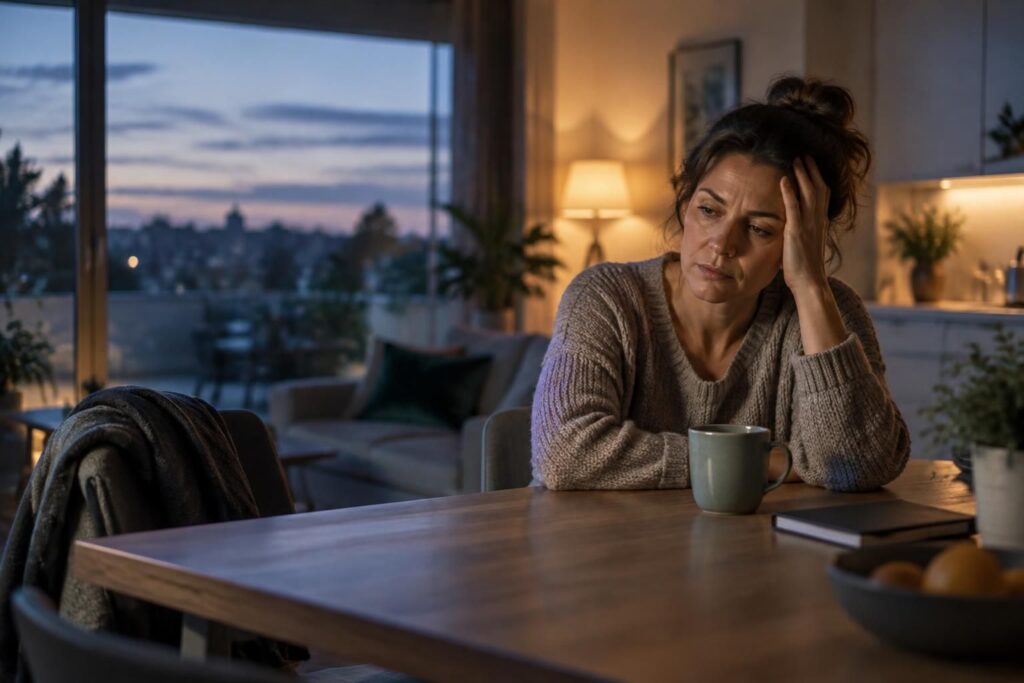
Hi, Patrick here. Yes, ongoing evening stress can gradually weaken your defenses, especially if it disrupts your sleep. For disease prevention, start by calming your body before bedtime and seek help if fatigue or infections keep recurring. Stress isn’t an enemy to eliminate: it’s its ongoing presence that deserves your attention.
Evening stress: why it can weaken your defenses
Cortisol is a useful hormone when a challenge arises: it helps mobilize energy and regulate certain inflammatory responses. But if tension persists for weeks, this balance can be disrupted, and the cells of the immune system may respond less effectively.
In the evening, the body should gradually slow down. But anxiety and thoughts that go round and round can delay falling asleep, fragment the night, and reduce recovery time. Prolonged stress and lack of rest can then fuel each other.
Things to do right now:
- Keep your bedtimes and wake-up times fairly regular.
- Dim the lights and put screens away before bed.
- Try a few minutes of slow breathing, without trying to “get it right.”
- Choose moderate physical activity during the day.
- Opt for varied meals and ask for advice before taking supplements.
Things to do right now: choose just one easy habit to stick to tonight, then keep it up for several days. To learn more, see these tips on evening stress and its possible effects and on ways to calm your mind before bed.
Deep sleep and immunity: the duo to protect
The night is not simply a pause. Deep sleep contributes to recovery and the consolidation of immune memory, which helps the body recognize agents it has encountered before. Sleep that is cut short or often interrupted can disrupt these functions.
For many adults, around 7 to 9 hours of sleep is a useful guideline, which should be adjusted to the individual and the circumstances. Sleep quality matters too: a dark, quiet bedroom, consistent schedules, and less bright light in the evening can help.
A simple anecdote: after several evenings of answering work messages in bed, Camille started falling asleep later and waking up tired. By leaving her phone outside the bedroom and taking a few minutes to breathe, she gradually got back to a calmer routine.
“Rest doesn’t erase difficulties, but it helps the body get through them better.” That’s why a realistic routine is often better than a perfect method followed for two days.
Three steps to ease stress before bed
- Step 1: About an hour before bed, dim the lights and finish any tasks that can’t wait. If possible, avoid coffee or tea late in the day.
- Step 2: Take five minutes to slow your breathing or read a few pages. This break encourages relaxation and helps release tension.
- Step 3: When you wake up, briefly note what helped or hindered your rest. Adjust one habit at a time to build a sustainable healthy lifestyle.
Chronic stress: recognize the signs and seek advice
If it’s just an occasional stressful evening, a calming routine and a little rest may be enough to restore your balance. If you experience anxiety almost every evening, ongoing sleep problems, or recurring infections, talk to a healthcare professional.
Moderate activity, such as walking or cycling, can support sleep and stress management. A varied diet also contributes to overall balance, but no food or supplement can miraculously strengthen your defenses.
The goal isn’t to control every night. A gradual approach better protects your emotional balance than striving for perfection, and a doctor can investigate other causes if symptoms persist.
| Situation | Helpful response |
|---|---|
| Occasional evening tension | Take a short break, breathe slowly, and get back to a regular routine. |
| Ongoing disrupted sleep | Note your symptoms and talk to a healthcare professional. |
| Recurring infections or persistent fatigue | Seek medical advice rather than self-treating. |
Does evening stress necessarily weaken the immune system?
Not necessarily. Occasional stress is a normal response. When it becomes prolonged and disrupts sleep, it can contribute to weakening the body’s defenses; a professional can assess persistent symptoms.
How many hours of sleep do you need to recover well?
Around 7 to 9 hours is a common guideline for many adults, but needs vary from person to person. Regularity and sleep quality matter too.
What should you do if anxiety keeps you from sleeping?
Try a calming routine, slow breathing, and regular schedules. If anxiety or sleep problems persist or affect your daily life, ask a doctor or psychologist for advice.
Can supplements prevent stress-related illnesses?
They are no substitute for sleep, a varied diet, or medical advice. Ask a professional for advice before taking them, especially if you are already taking medication.
Thanks for your interest. See you soon; Patrick