
Introduction
Hi, it’s Patrick.
After stress, choose a simple meal with fiber, protein, and water: lentils and vegetables, for example, followed by a square or two of dark chocolate if you feel like it.
A calming diet won’t remove the causes of stress, but it can support your energy without turning every meal into a rule to follow.
The most useful guideline: eat without pressure, at your own pace, and notice what works for you.
Things to do right now:
- Drink a glass of water and take a few breaths before eating.
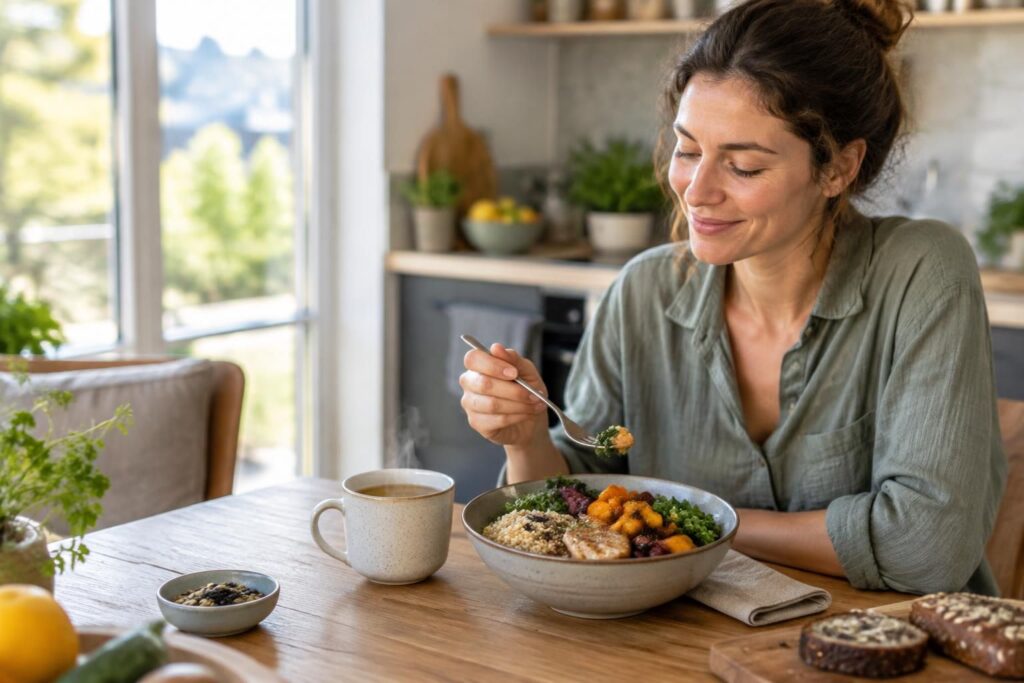
- Make a plate with vegetables, a source of protein, and a whole grain.
- Add a small serving of nuts, seeds, or legumes for dietary magnesium.
- Try a small amount of fermented food if you digest it well.
- Enjoy dark chocolate in moderation, without treating it as a remedy.
To learn more without overwhelming yourself, you can read these tips on a balanced diet and stress and this suggestion for digestion when your stomach knots up.
Anti-stress nutrition: focus on a filling meal
After a tense day, a very sugary meal or one eaten in a rush can leave you feeling hungry again soon afterward. A satisfying plate with fiber and protein can help you get back to a regular rhythm. This is a simple foundation for anti-stress nutrition, not a promise to make anxiety disappear.
Lentils, chickpeas, oats, vegetables, eggs, and oily fish are easy options to include. They provide a range of nutrients that are useful to the body, including fiber and dietary magnesium. For a balanced snack, try a piece of fruit with a few almonds, or yogurt with rolled oats.
Relaxing foods, with no must-have list
Nuts and seeds can complement a meal, while legumes and whole grains provide fiber. Some fermented foods, such as kefir or sauerkraut, may also suit some people. Start with a small serving: comfortable digestion matters just as much as what’s on your plate.
A small study involving 45 adults compared a diet enriched with prebiotic fiber and fermented foods with a control diet over four weeks. Participants in the relevant group reported feeling less stressed and also reported improved sleep. This result is encouraging, but it does not guarantee the same effect for everyone.
| Simple option | What it provides | How to try it |
|---|---|---|
| Lentils or chickpeas | Fiber and plant protein | In a soup or warm salad |
| Oats and fruit | Fiber and energy for a snack | As porridge or with yogurt |
| Kefir or fermented vegetables | Fermented foods, depending on tolerance | Start with a small amount |
| Dark chocolate | A cocoa-rich treat | A square or two, as you like |
Dark chocolate contains polyphenols and magnesium, but it also provides energy and varying amounts of caffeine, depending on the product. A square or two may be enough to enjoy a comforting meal or wind down gently at the end of the evening. “A food can support a routine, but it can’t replace rest or the help you need.”
After stress: three steps to eat without getting tense
- Step 1: Take a short break. Relax your shoulders, drink a little water, and check whether you’re hungry, thirsty, or simply need a breather.
- Step 2: Put together a simple plate: vegetables, protein, and a starchy food. If you’re short on time, a bowl of soup with bread and an egg can do the trick.
- Step 3: Sit down to eat without trying to control everything. Afterwards, notice whether the portion and the foods worked for you.
Camille often got home late and snacked standing up, without really noticing what she was eating. By making lentil soup in advance and giving herself ten minutes at the table, she found her evenings easier to manage.
If it’s X… / If it’s Y…
If stress takes away your appetite, start with a small, easy-to-eat portion, such as yogurt and fruit. If you feel more like snacking when you’re not hungry, take a break and then choose a balanced snack if your body asks for one.
Supporting the nervous system also involves sleep, movement, and taking time to recover. Food can support stress management, but it doesn’t replace medical advice if anxiety or eating problems persist.
A kimchi recipe to adapt to your tolerance
Fermented vegetables aren’t suitable for everyone, especially if you’re sensitive to chili, salt, or fermented foods. For a homemade version, thinly slice carrot, fennel, and cabbage, add a little salt, then let the vegetables release their juices before mixing them with a paste of garlic, ginger, and mild chili.
Put everything in a clean jar, pack the vegetables down firmly, and make sure they remain covered by their juices. Fermentation requires strict hygiene and storage practices: if in doubt, choose a product made under proper conditions and start with a small amount. The right choice is the one that leaves you feeling comfortable after your meal.
Frequently asked questions about eating after stress
What meal should I choose after a stressful day?
A simple meal with vegetables, a source of protein, and a starchy food, such as lentils with rice and vegetables, is a good place to start. Adjust the portion to your appetite.
Does dark chocolate really help you relax?
It can be enjoyable and contains polyphenols, but it does not treat stress. A small portion is usually enough, especially if you are sensitive to caffeine.
Are fermented foods suitable for everyone?
No. Tolerance varies. Start with a small amount or avoid them if you know they trigger digestive symptoms.
What should I eat if stress takes away my appetite?
Choose a small, easy-to-eat portion, such as soup, yogurt, or fruit with a few nuts. If your loss of appetite persists, seek advice from a healthcare professional.
Thanks for your interest. See you soon; Patrick