
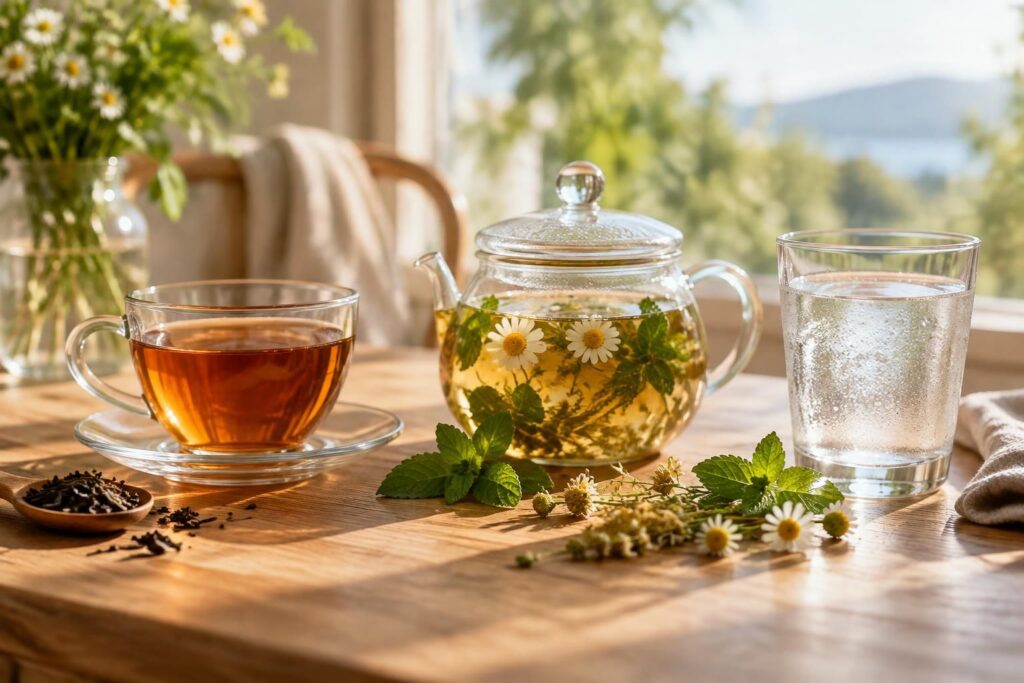
Introduction
Hi, Patrick here. To soothe yourself without feeling sluggish, choose water to hydrate, herbal tea to relax, or a light tea if you need a little alertness. The right drink depends mainly on how you feel at the moment and how sensitive you are to caffeine. In nutrition, this simple choice can support your well-being without promising a miracle effect.
Do this now:
- Drink a glass of water if you’re thirsty or haven’t had much to drink during the day.
- Choose chamomile or lemon balm herbal tea for a calming ritual.
- Have a light green tea in the morning if you tolerate caffeine well.
- Avoid energy drinks and very sugary drinks if you want to relax.
- Make an unsweetened infusion and drink it slowly, paying attention to how you feel.
To learn more, discover how to adapt drinks to nervous digestion and why water, herbal tea, or a snack don’t meet the same need: soothing nervous digestion and choosing between herbal tea, water, and snacking.
Tea, herbal tea, or water: which drink should you choose?
Water remains the simplest choice for hydration. It contains neither caffeine nor sugar, and is suitable at any time if you’re thirsty. Lemon can add flavor to your glass, but it doesn’t turn water into a detox remedy.
Tea comes from the tea plant and generally contains caffeine, sometimes called theine. It can support alertness, but may also disrupt sleep or increase nervousness in people who are sensitive to it, especially later in the day.
Herbal tea refers to a drink made with plants, flowers, leaves, or roots. Infusion is a preparation method: hot water is poured over the delicate parts, then left to steep. Roots or seeds may require a brief decoction. The differences are explained in this guide to tea, herbal tea, and infusions.
| Drink | Possible use | Practical tip |
|---|---|---|
| Water | Everyday hydration | Drink according to your thirst and situation |
| Chamomile herbal tea | Calming ritual | In the evening or during a quiet break |
| Light green tea | Gentle alertness | Preferably in the morning or early afternoon |
| Rooibos | Hot caffeine-free drink | May be suitable in the evening, in moderation |
A soothing herbal tea without false promises
Chamomile and lemon balm are often chosen to accompany a moment of relaxation. Their value also lies in the ritual: preparing a cup, sitting down, and slowing down for a few minutes makes for a pause, without guaranteeing an effect on stress or sleep by itself.
Peppermint can be pleasant after a meal, but it isn’t suitable for everyone, particularly in cases of reflux. Plants can also have contraindications or interact with certain medications. If you’re pregnant, taking medication, or have a health condition, ask a healthcare professional for advice.
For example, Camille replaced her evening tea with a caffeine-free infusion. What she appreciated most was this quiet time, which became part of her bedtime routine. “The best drink is the one that meets your needs in the moment.”
For one cup, follow the instructions on the package: the amount and steeping time vary depending on the plant. Avoid combining more herbs or drinking more cups in the hope of getting a stronger effect. Useful information about the uses and limitations of plants can be found in this feature on infusions.
Choosing according to stress, fatigue, or digestion
If you’re feeling stressed, choose a caffeine-free herbal tea and take the time to pause. If you’re feeling temporarily tired, start by drinking water and eating if you’re hungry; a light tea may be suitable in the morning, but avoid it if caffeine makes you nervous.
For digestion, a hot drink can be comforting, but it doesn’t replace a suitable meal or medical advice if symptoms persist. Sugar-free drinks are a simple choice if you want to limit added sugars; juice or a smoothie is still a source of natural sugars and is best consumed according to your appetite and the context.
A simple three-step method
- Step 1: identify what you need: hydration, a moment of calm, relief from fatigue, or digestive comfort.
- Step 2: choose water for hydration, caffeine-free herbal tea for a pause, or light tea if you want to stay alert.
- Step 3: drink slowly, then notice how you feel. If the discomfort returns or persists, don’t rely on a drink alone.
Keep this simple guideline in mind: water hydrates, tea can stimulate, and herbal tea provides a hot caffeine-free drink when it’s made with a plant that contains no caffeine. Your choice should follow how you feel rather than a promise on the package.
Frequently asked questions about tea, herbal tea, and water
Which drink should you choose to relax in the evening?
Caffeine-free herbal tea, such as chamomile or rooibos, can be part of a calming routine. Check the precautions specific to the plant and avoid tea if caffeine disrupts your sleep.
Does lemon water relieve fatigue?
It contributes to hydration and may taste pleasant, but it doesn’t address every cause of fatigue. If fatigue persists, ask a healthcare professional for advice.
Can you drink green tea at any time?
Green tea contains caffeine. If you’re sensitive to it, have it in the morning or early afternoon and avoid it close to bedtime.
How many cups of herbal tea can you drink per day?
It depends on the plant, how it’s prepared, and your situation. Follow the instructions on the package and ask for advice if you’re taking medication, are pregnant, or have a health condition.
Thanks for your interest. See you soon; Patrick