
Introduction
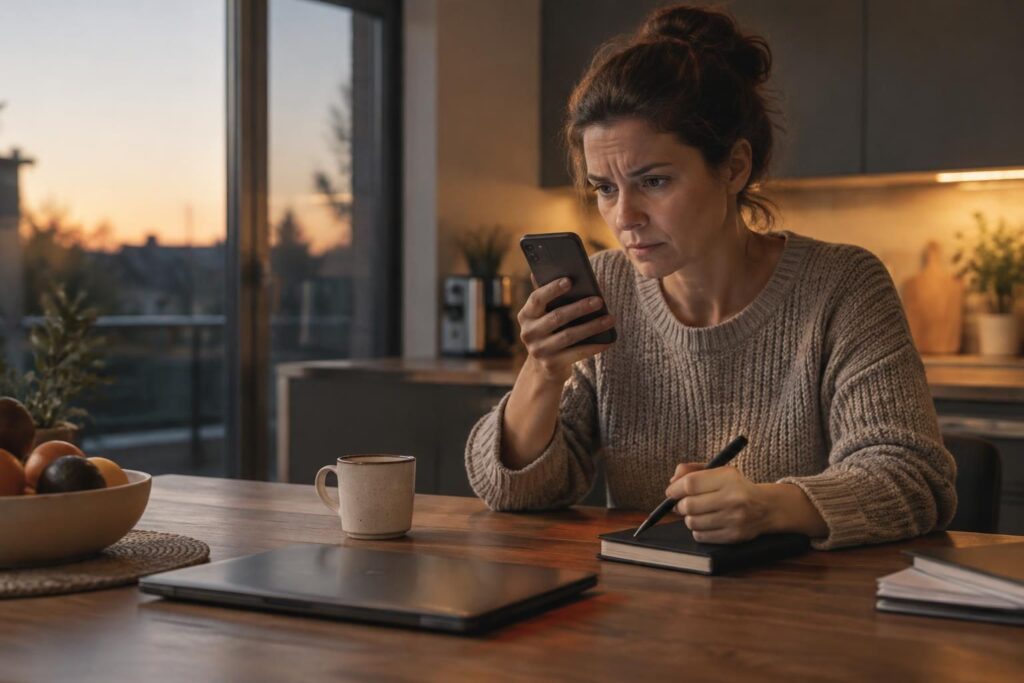
Hi, it’s Patrick. The habit that often keeps stress going at home is continuing to check messages and problems instead of taking a real break. Put your phone down for a few minutes and slow your breathing: this simple act helps your body come out of alert mode. Stress management often starts with this pause, not with a long, complicated routine.
Try this right now:
- Put your phone out of reach for five minutes.
- Breathe in gently, then breathe out a little longer, without forcing it.
- Write down the worry going round and round in your head.
- Choose just one next step, however small.
- Set aside some quiet time before bed.
To understand this mechanism and find other practical ideas, try this right now: spot the signs of chronic stress and discover these micro-breaks to ease the pressure.
Why this habit keeps stress alive at home
Getting home isn’t always enough to let the tension fade. If you keep checking notifications, replaying a conversation, or anticipating tomorrow, your attention stays caught up in your worries. The mechanisms of stress can then keep your body on alert, even in a place where you feel safe.
This stress response sometimes becomes automatic: check, reply, take control, then start again. Over time, these anxious habits add to your mental load and make it harder to rest. The first step is to notice the behavior without judging yourself.
Anecdotes often get the point across better than a long speech: after dinner, Samir would check his emails “just once.” He’d end up replying to several messages and going to bed feeling as though his day wasn’t over.
Two situations to tell apart
If you feel temporarily restless after a demanding day, try a short breathing break and a relaxing activity. If stress regularly disrupts your sleep, work, or relationships, talk to a healthcare professional.
A simple breathing exercise to support emotional regulation
Box breathing can be a helpful guide: breathe in for four seconds, hold your breath for four seconds, breathe out for four seconds, then pause for four seconds with your lungs empty. Repeat for a few cycles without forcing it, and stop if you feel dizzy. This rhythm isn’t a universal solution, but it may help bring your attention back to the present moment.
You can also try heart coherence breathing: breathe in for about five seconds, then breathe out for about five seconds, for five minutes. Adjust the rhythm to what feels comfortable. The goal isn’t to master an exercise, but to support emotional management with a practice that’s easy to return to.
“A break doesn’t solve everything, but it can change what you do next.” Keep this thought in mind when you feel like reaching for your phone again.
Three steps to break the automatic response
- Step 1: notice the trigger. Pay attention to what sets off the habit: a notification, a thought about tomorrow, or tension in your body.
- Step 2: take a break. Move the screen away and take a few slow breaths. A short walk or gentle stretch can also help.
- Step 3: choose one limited action. Write down what can wait and what really needs a response now. Then move on to an activity that marks the end of your day.
This method strengthens your sense of control without claiming to eliminate all your worries. A short list, a delegated task, or saying “no” at the right time can also lighten your mental load.
Habits that support well-being at home
Movement helps release tension: a walk, a few stretches, or yoga may be enough. Aim for a realistic length of time, such as twenty to thirty minutes depending on your fitness and circumstances, rather than a goal that adds pressure.
Sleep matters too. Try to keep a fairly regular schedule, reduce screen time before bed, and plan some quiet wind-down time, such as reading or listening to music. These adjustments don’t replace professional support if stress becomes overwhelming, but they can support well-being at home.
| Time | Common habit | Practical alternative |
|---|---|---|
| When you get home | Check messages right away | Take a five-minute break before replying |
| After dinner | Think over unfinished tasks | Write down one priority for tomorrow, then close the list |
| Before bed | Scroll on your phone in bed | Choose a relaxing activity instead |
What the figures can’t tell us
The available data don’t allow us to confirm certain specific statistics about stress in France or quantified effects attributed to recent studies. It’s therefore best to avoid promises about results and try techniques according to your needs. If symptoms persist or get worse, a professional can help you choose appropriate support.
Helpful questions about managing stress at home
What habit keeps stress going at home?
Staying on alert by checking messages or dwelling on problems can prolong tension. A mindful pause can help interrupt this automatic response.
How long should I practice heart coherence breathing?
You can start with about five minutes, breathing in and out slowly. Adjust the rhythm to what feels comfortable and stop if you feel unwell.
What should I do if stress disrupts my sleep?
Try to keep a regular schedule and do something relaxing before bed. If the difficulties persist or affect your daily life, ask a healthcare professional for advice.
Thank you for your interest. See you soon; Patrick