
Introduction
Hi, Patrick here. To calm the hustle and bustle, try five simple things: slow your breathing, tune in to your sensations, savor a hot drink, move gently, and practice positive visualization. They fit into a busy day, with no equipment or lengthy session needed. Stress can affect adults and children alike, especially before an exam or after a change in routine: the key is to find an easy ritual you can return to.
Try now:
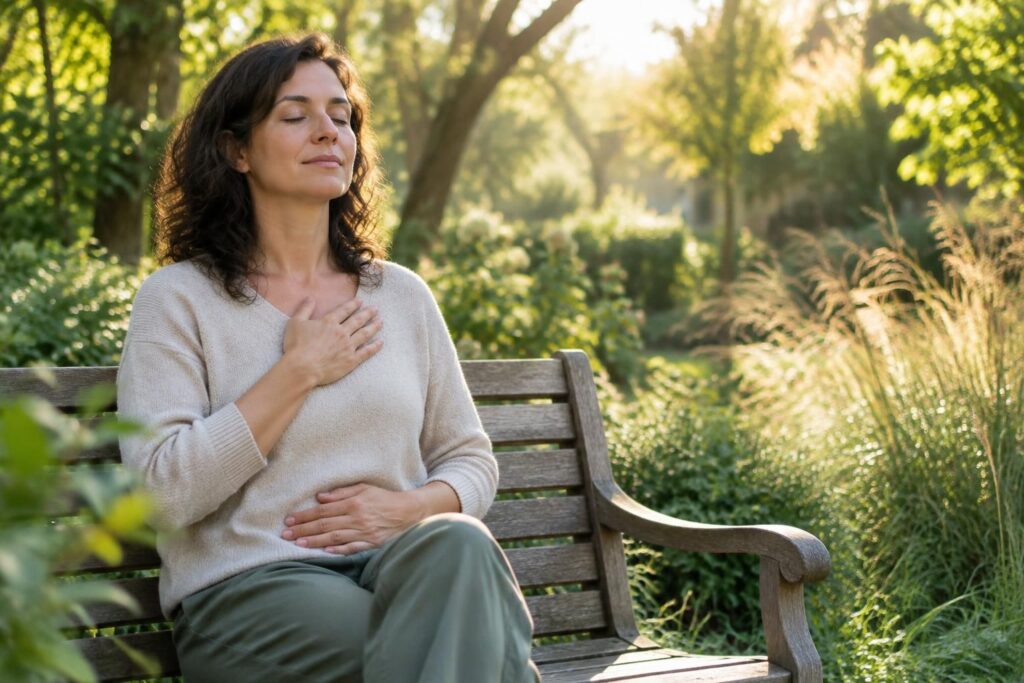
- Place one hand on your stomach and exhale slowly.
- Notice three details around you: a color, a sound, a sensation.
- Make a herbal tea and take the time to notice its steam.
- Do a few stretches or take a short walk outside.
- Imagine a place that soothes you for one minute.
Choose just one thing and try it today, without trying to change everything at once. To explore other accessible relaxation methods or discover ways to calm your body in just a few minutes, keep these tips handy.
Five natural ways to calm stress
When your thoughts start racing, a micro-break can provide a helpful pause. Sometimes just a few seconds are enough to bring your attention back to your body and the present moment.
1. Deep breathing and heart coherence
Place one hand on your stomach. Breathe in gently through your nose, letting your abdomen rise, then breathe out without forcing it. Repeat for a few cycles: if you feel uncomfortable, return to your natural breathing.
Heart coherence involves breathing slowly and regularly for a few minutes. You can try a comfortable rhythm, such as inhaling and exhaling for about five seconds each, without holding your breath. The right rhythm is one that feels easy for you.
2. A sensory pause to break the cycle
Choose one detail to observe: the light on a wall, the sound of rain, or the warmth of a mug. This sensory pause brings your attention back to the present and offers a simple anchor when your thoughts are going round in circles.
You can also try a short meditation using your senses: notice what you see, touch, and hear, then what you smell and taste. “Returning to your senses is already a way to slow things down.”
3. Slowly savor a cup of herbal tea
Chamomile, linden, and verbena are often enjoyed as part of an evening ritual. Prepare an infusion according to the product instructions, then take the time to notice its color, steam, and flavor. The drink alone won’t treat significant stress, but this quiet moment can help mark a transition.
Herbs and essential oils are not suitable for everyone. If you take medication, are pregnant or breastfeeding, or are preparing something for a young child, ask a healthcare professional for advice before using them.
4. Move gently, outdoors if possible
A few neck and shoulder stretches can help release tension. Muscle relaxation can also involve a simple exercise: gently tense a group of muscles for a few seconds, then release, without causing pain.
If you can get outside, a walk in nature offers another way to focus your attention: the rhythm of your steps, the sounds, and the fresh air. Even a park or a tree-lined street can offer a little breathing space. Some gentle yoga can also combine movement, breathing, and relaxation.
5. Positive visualization and gratitude
Close your eyes if you’re somewhere safe, then imagine a familiar place where you feel good. Picture a few concrete details, such as the light, sounds, or temperature: this positive visualization gives your mind a soothing image to focus on.
You can also name one pleasant thing from your day, however small. For a child, this ritual can fit in before homework or bedtime, without expecting them to share more than they want to.
Which thing should you try and when?
The most helpful thing is often the one you can do without any difficulty. Here are a few pointers to help you choose quickly, depending on the situation.
| When | What to try | Practical tip |
|---|---|---|
| Before speaking in public | Deep breathing | Exhale slowly a few times |
| When your thoughts are going round in circles | Sensory pause | Notice three details around you |
| At the end of a busy day | Herbal tea or visualization | Create a calming ritual that lasts a few minutes |
| Tension in your shoulders | Gentle stretches | Stay within a comfortable range of motion |
| When you need some fresh air | Walk in nature | Walk at an easy pace |
Here’s a quick example: before a test, a teenager took a minute to feel her feet on the ground and slow her breathing. It didn’t make her stress disappear, but she was able to start her test feeling a little calmer.
A three-step relaxation routine
There’s no need to plan a long session. Repeating a short sequence at the same time each day can make it feel more familiar.
- Step 1: Notice the signal that tells you agitation is building: a clenched jaw, shortness of breath, or difficulty concentrating.
- Step 2: Choose just one thing, such as three slow breaths, a few stretches, or a minute of mindful observation.
- Step 3: Simply check whether you feel a little calmer. If it doesn’t feel right for you, try something else next time.
If you’re experiencing temporary tension before an appointment, start by slowing your exhale. If anxiety keeps coming back or disrupts your sleep and daily life, seek advice from a healthcare professional.
To try different exercises, a guided video can help you find a comfortable breathing rhythm. Keep the practice gentle and stop if you feel unwell.
When natural approaches aren’t enough
Relaxation rituals can support well-being, but they are no substitute for medical advice. If anxiety persists, sleep problems continue, or significant physical symptoms appear, talk to a doctor or pharmacist.
For children, watch for lasting changes in behavior, recurring stomachaches, or worry that interferes with their usual activities. A reassuring environment can help, but a professional can also support the family if needed.
Which relaxation technique should I try first?
Start with something simple and comfortable, such as gently slowing your exhale or noticing a few sensations around you.
How long does it take to relax?
A few seconds can create a pause, while some people prefer to practice for several minutes. Adjust the duration to your comfort and the situation.
Are stress-relief herbal teas suitable for everyone?
No. Herbs may have contraindications or interact with certain medications. If in doubt, ask a healthcare professional for advice, especially for a child, during pregnancy, or while breastfeeding.
What should I do if stress keeps coming back?
Notice the signs that come with it and establish a regular soothing ritual. If stress has a lasting effect on your sleep or daily life, consult a healthcare professional.
Thanks for your interest. See you soon; Patrick