Introduction
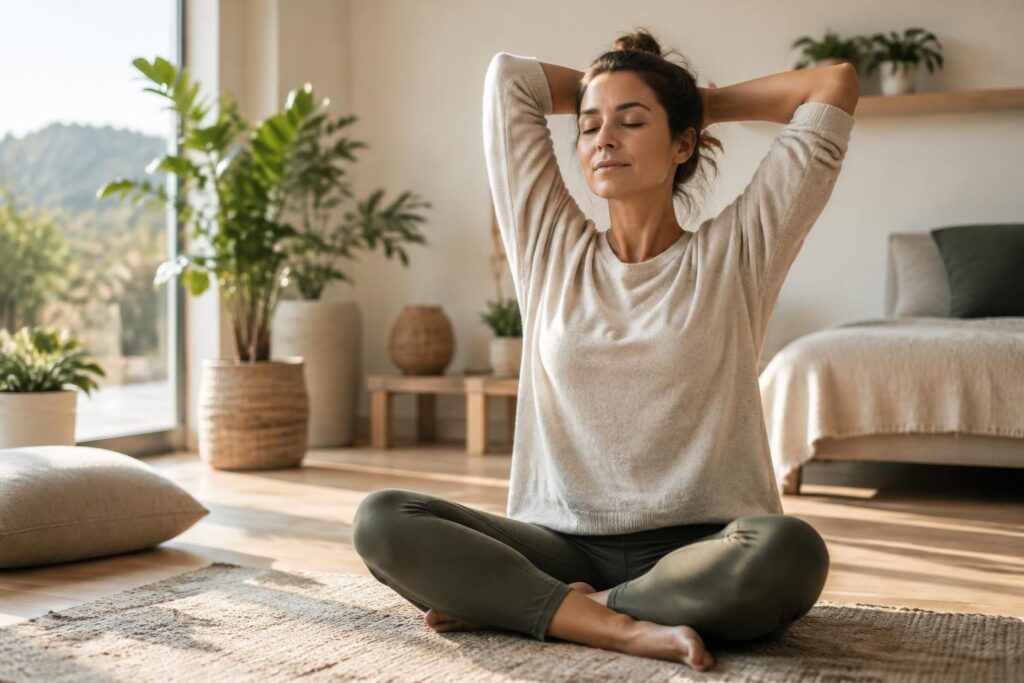
Hi, Patrick here. To choose between a mental or muscle relaxation exercise, start with what feels most natural to you: following your breath, relaxing your body, or letting an image guide you. If physical tension is the main issue, try muscle relaxation; if your attention is restless, start with a simple mental relaxation exercise. You don’t need to combine methods: a few minutes are enough to figure out what works for you. The right choice is the one you can repeat without forcing yourself.
Try this now:
- Choose a quiet moment for a few minutes.
- Notice whether you prefer following a breath, a sensation, an image, or a voice.
- Try one method at a time.
- Keep your eyes open if that makes you more comfortable.
- Stop or switch exercises if you feel uncomfortable.
To compare other exercises, you can check out these guides to three simple methods for when everything feels overwhelming and choosing between sitting and lying down.
Mental or muscle relaxation: how to choose
The main difference lies in what you focus on. Mental relaxation uses your breath, an image, or observing your thoughts; muscle relaxation invites you to notice and then release physical tension.
If it’s X, with tense shoulders or a clenched jaw, try gentle muscle relaxation. If it’s Y, with a wandering attention but little bodily tension, choose breathing or guided visualization.
| If you prefer… | Try… | Adapt it this way |
|---|---|---|
| A simple rhythm | Observing a few natural breaths | Don’t count if it feels like an effort |
| Concrete sensations | Relaxing your hands, shoulders, and jaw | Avoid any painful tightening |
| Imagination | Calling to mind a familiar place or a color | Focus on a sound or a word if no image comes to mind |
| Guidance | Following a recorded voice | Turn off the audio if its pace bothers you |
This table is a starting point, not a rule. Your choice of technique can change depending on your energy level, the time of day, and what makes you comfortable.
Three steps for trying a relaxation technique
- Step 1: Settle into a comfortable position and choose one focus: your breath, an area of your body, or an image.
- Step 2: Practice for a few minutes without trying to achieve perfect calm. For deep breathing, let your breath remain natural; a prolonged exhale isn’t necessary.
- Step 3: After the exercise, note what helped and what took too much effort. Next time, change just one thing, such as your posture or the duration.
With progressive relaxation, you can gently tense and then relax your hands, if that feels comfortable. You can also simply notice the difference between tension and relaxation: three areas of the body are enough for a first try.
Once, Camille tried counting her breaths before a meeting and felt more tense from monitoring the rhythm. She stopped counting and focused on her feet resting on the floor instead: that worked better for her.
“A comfortable practice is easier to return to.” This sums up the main point: regular practice often helps more than one long session now and then.
Breathing, visualization, and body relaxation
Noticing the air moving in and out can offer an accessible pause, at home or at work. Rest one hand wherever it feels comfortable, or leave your hands free, then simply notice the movement of your breath. If you feel dizzy or uncomfortable, return to your usual breathing rhythm and choose another focus.
Guided visualization is based on a familiar scene, a light, or a regular movement. Add a sensory detail, such as the warmth of the sun or the sound of water; if no clear image forms, you can still continue the exercise with a word or a sound.
A recording provides structure, but a voice isn’t automatically more effective than practicing on your own. Choose a time when you don’t need to keep an eye on anything, and never listen to a guided exercise while driving.
Sophrology often combines breathing, gentle movements, and mental imagery in a more structured approach. Meditation, on the other hand, is more about observing thoughts and sensations without necessarily trying to make them go away. Gentle yoga, tai chi, and qi gong may also suit you if you don’t like staying still.
Adapting relaxation to stress management
If stress mainly shows up as stiffness, body relaxation or a few gentle movements can be a good place to start. If you’re looking for a short break, observing your breath is easy to try; if you want to train your attention over time, meditation may be a better fit.
Sophrology offers a step-by-step approach that combines several tools, while progressive relaxation focuses on noticing tension and release. There’s no single method that’s best for everyone: comfort and wanting to try again are good criteria for choosing.
These practices are intended to support well-being and can help with everyday stress management. If anxiety or sleep problems persist and affect your health or mood, seek advice from a healthcare professional.
Frequently asked questions about relaxation exercises
How long should I practice?
Start with a few minutes. A short, regular session may be easier to fit in than a long exercise done only occasionally.
What should I do if focusing on my breath feels uncomfortable?
Return to your usual breathing and shift your focus: notice your hands, your feet on the floor, or the sounds around you.
Is muscle relaxation suitable for everyone?
It can help you notice tension, but tensing your muscles should not cause pain. You can simply notice and then relax your muscles without deliberately tensing them.
Should I choose just one technique?
You can try several, but try them separately at first. This makes it easier to figure out which format works for you.
Thanks for your interest. See you soon; Patrick