
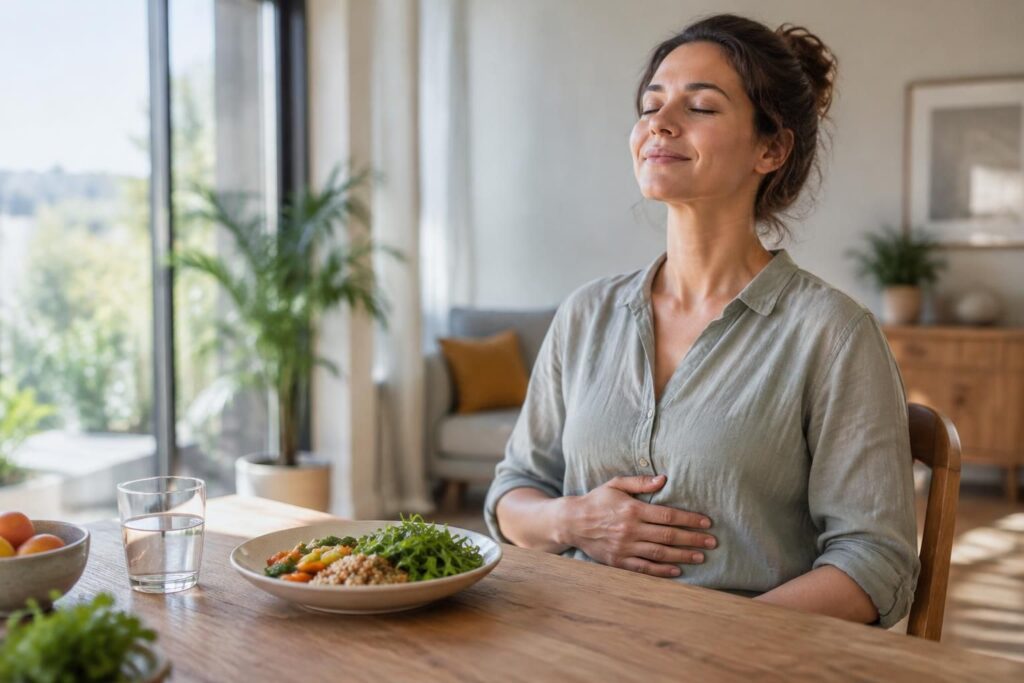
Introduction
Hi, Patrick here. Yes, slow breathing can help you digest better by easing stress, without directly speeding up the stomach’s work. After a meal, a few minutes of gentle abdominal breathing can promote relaxation and digestive comfort. This simple practice can complement a suitable diet, but it does not replace medical advice if symptoms persist.
Things to do right now:
- Sit comfortably with your back straight.
- Loosen any clothing that is tight around your stomach.
- Place one hand on your abdomen to feel the movement of your breath.
- Breathe in gently through your nose, then breathe out without forcing it.
- Practice for a few minutes and stop if you feel dizzy.
Breathing and digestion are connected through the nervous system: during periods of stress, the body may be less able to rest and digest. To explore these tips further, also check out these suggestions for improving digestion after meals and these breathing techniques related to digestion.
Slow breathing and digestion: what’s the connection?
The digestive system works in close connection with the brain. When you’re tense, discomfort can feel more pronounced and your stomach may tighten. Slowing your breathing can help calm the stress response and create a moment of rest after a meal.
However, breathing slowly does not break down food or treat a digestive disorder. The expected effect mainly involves relaxation and how you perceive digestive comfort. “Calm doesn’t digest your food for you, but it gives your body a moment of respite.”
A very simple anecdote
After eating lunch in a hurry, Lina often felt heavy and restless. By taking a few minutes to breathe calmly before returning to work, she mainly noticed that she felt less tense.
This difference doesn’t mean that breathing sped up her digestion. Rather, it shows that the nervous system and sensations in the stomach can be affected by tension levels.
How to practice abdominal breathing after a meal
Stay seated or stand in a comfortable, upright position. Avoid lying down right after eating, especially if you are prone to reflux. Keep your breathing easy: there’s no need to fill your lungs to capacity.
- Step 1: place one hand on your stomach and relax your shoulders.
- Step 2: breathe in gently through your nose for about 4 to 5 seconds, as comfortable for you.
- Step 3: breathe out slowly for a similar amount of time, without holding your breath, for 3 to 5 minutes.
If counting makes you tense, forget the seconds and simply aim for a steady rhythm. A gentle 10- to 15-minute walk can also feel pleasant after a meal, depending on your situation.
When is slow breathing enough, and when should you take a different approach?
If you have mild discomfort after eating too quickly, try a few minutes of slow breathing and eat more slowly at your next meal. If the pain is severe, keeps coming back, or is accompanied by vomiting, blood in your stool, or weight loss, seek medical advice promptly.
To support nutrition and digestive well-being in everyday life, take time to chew, avoid eating in a rush, and note which foods trigger your symptoms. Breathing is a relaxation aid, not a treatment.
Practical guidelines for choosing your pace
| Situation | What to try | Keep in mind |
|---|---|---|
| Tension after a meal | Breathe slowly and comfortably for a few minutes | Promotes relaxation, but does not guarantee a direct digestive effect |
| Eating too quickly | Put your cutlery down between bites and chew slowly | Digestion begins in the mouth |
| Regular bloating | Note the circumstances and associated foods | Consult a healthcare professional if symptoms persist or worsen |
The right pace is one that feels comfortable. If the exercise causes dizziness, discomfort, or shortness of breath, return to natural breathing and stop practicing.
Frequently asked questions about slow breathing and digestion
How long should you breathe after a meal?
Start with 3 to 5 minutes at a gentle, comfortable pace. You can continue for longer if it helps you relax, without trying to force your breathing.
Does slow breathing speed up digestion?
It does not directly speed up digestion. It may help reduce tension and make digestive sensations easier to manage.
Can you practice while lying down after eating?
After a meal, choose a seated or standing position. If you are prone to reflux, avoid lying down right away.
Thanks for your interest. See you soon; Patrick