
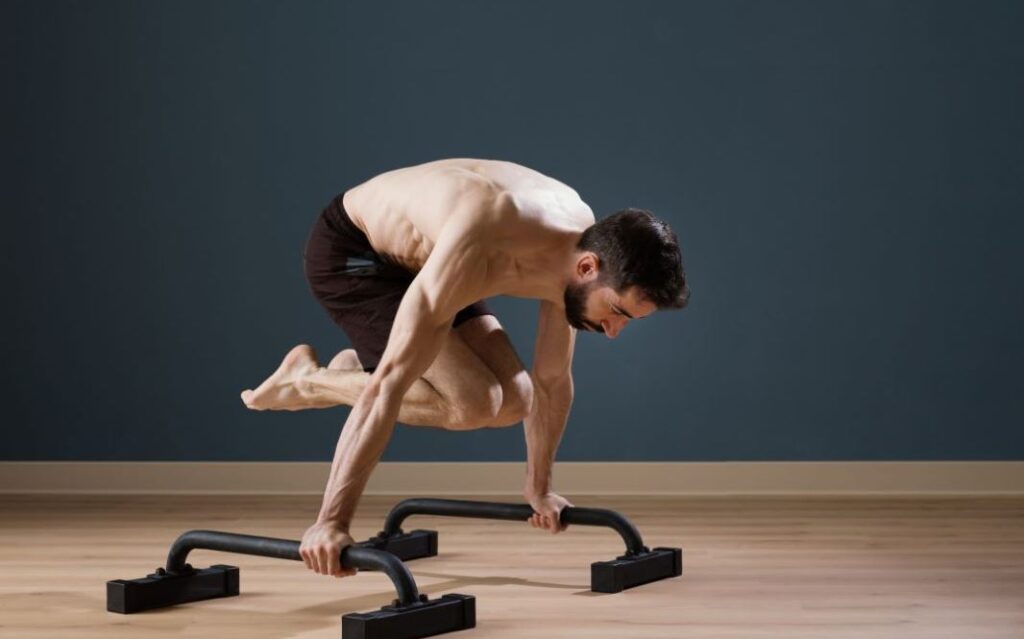
To get started with calisthenics, begin with two short sessions per week, including assisted squats, wall or incline push-ups, and easy core holds. Choose a variation you can control without pain, then gradually increase the repetitions. Pull-ups and advanced skills can wait: this guide offers bodyweight basics to help you build strength at your own pace.
Why choose calisthenics?
As callisthenies.fr points out, calisthenics is much more than a simple training method: it’s a movement philosophy. It helps you build a balanced physique, improve your body control, and become more self-reliant.
The benefits of calisthenics
- No equipment needed: a floor, a pull-up bar, and a little motivation
- Full-body workout: every movement engages several muscle groups
- Endless progressions: from push-ups to spectacular skills such as the front lever or the planche
- Improved posture and mobility
- Adaptable to many fitness levels: choose exercises according to your abilities and seek guidance if needed
Assess your fitness level before you start
Before you get started, take note of the movements you can perform comfortably, without trying to set a record. If you have an injury, persistent pain, or a condition that limits physical exertion, consult a healthcare professional before following a generic routine.
Basic tests
Try a few easy repetitions while breathing normally; there’s no need to go to exhaustion:
- Standard push-ups: can you do a few against a wall or on a stable support?
- Pull-ups: if you can’t pull yourself up yet, leave this step for later and choose an assisted pull using equipment designed for that purpose.
- Core holds: can you briefly hold an easy position without arching your back or holding your breath?
- Bodyweight squats: can you control the movement well?
If you can’t do a pull-up or a push-up, don’t panic—calisthenics offers many beginner variations.
The fundamentals to master
Calisthenics is based on basic movements that are crucial to master before trying advanced skills.
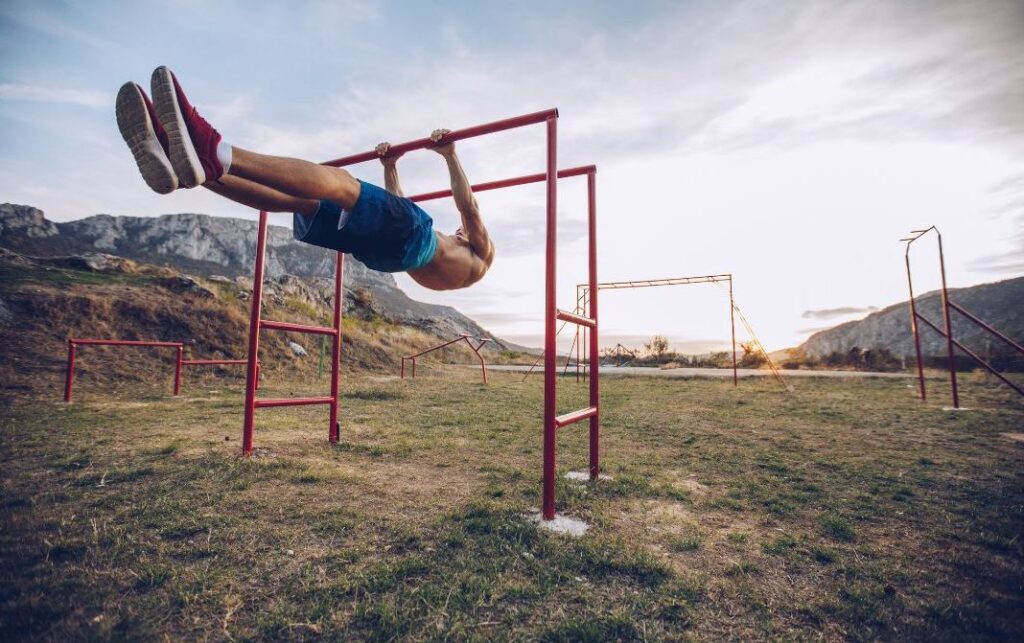
The 6 pillars of calisthenics for beginners
- Push-ups
Strengthen the chest, triceps, and shoulders.
➤ Easier variation: incline push-ups or knee push-ups - Pull-ups
Target the back and biceps.
➤ Easier variation: Australian pull-ups (ring rows or low-bar rows) - Dips
Excellent for the triceps and shoulders.
➤ Save these for later if your shoulders tolerate them; wall push-ups are enough to start with - Squats
Strengthen the legs and glutes.
➤ Easier variation: partial squats, then full squats - Core holds
Develop your core and improve stability.
➤ Front and side planks - Leg raises
Target the abdominal muscles.
➤ Easier variation: bent-leg raises or hanging knee raises
Include these movements in a full-body program, 2 to 3 times per week.
Building a beginner calisthenics program
Here’s an adaptable example for a healthy beginner. Start with a few minutes of walking in place and gentle movements. Leave at least one rest day between sessions and rest for about one to two minutes between sets, or longer if needed.
Beginner program: two non-consecutive sessions per week
| Exercise | Starting target | Sets |
|---|---|---|
| Wall push-ups or incline push-ups on a stable support | 5 to 8 controlled repetitions | 1 to 2 |
| Chair sit-to-stand or assisted squat | 5 to 8 comfortable repetitions | 1 to 2 |
| Assisted pull using secure equipment, if available | 5 to 8 repetitions; optional to start | 1 to 2 |
| Floor glute bridge | 5 to 8 repetitions | 1 to 2 |
| Wall plank or knee plank | 10 to 20 seconds, without holding your breath | 1 to 2 |
| Standing knee raise with support | 5 repetitions on each side | 1 to 2 |
Progression: if every set remains controlled and comfortable for two sessions, add one or two repetitions. When the top of the range becomes easy, slightly increase the difficulty of just one exercise. Stop exercising if you experience sharp pain, feel unwell, or become unusually short of breath. The NHS progressive strength exercises also offer simple variations; the program above is an example, not a personalized prescription.
The importance of technique and consistency
When you’re starting out with calisthenics, it’s essential to prioritize quality over quantity. Performing a movement correctly engages the muscles more effectively and reduces the risk of injury.
Tips for making quick progress
- Focus on perfect form with every repetition
- Don’t rush through the steps: master the basics before moving on to advanced skills
- Be consistent: even 20 minutes done well is better than a long, sloppy session
- Include active recovery to recover properly
Useful calisthenics equipment
Although this discipline can be practiced without equipment, some accessories can make it easier to get started:
Recommended equipment
- Pull-up bar (wall-mounted or doorway)
- Gymnastics rings: perfect for varying your exercises
- Resistance bands: useful for assistance with pull-ups
- Parallettes: to improve your grip and protect your wrists
- Exercise mat: for floor exercises and stretching
Nutrition and recovery: the foundations of your progress
To plan your meals around your workouts, these sports nutrition and recovery guidelines can complement your routine. Sports nutrition plays a crucial role in your progress. To gain strength and muscle mass, your body needs protein, carbohydrates, and fats, as well as good sleep.
Recommendations for proper recovery
- Get enough sleep: 7 to 9 hours per night
- Stay hydrated: water optimizes muscle performance
- Stretch after every session to improve mobility
- Choose a balanced diet rich in whole, unprocessed foods
Staying motivated over the long term
Motivation fuels your success. Set realistic goals and celebrate every bit of progress.
Tips for staying committed
- Keep a training journal
- Take progress photos
- Join a community or local training group
- Share your progress on social media or with friends
- Vary your exercises to avoid monotony
Conclusion
Starting calisthenics means reconnecting with your body, making progress with discipline, and building functional, aesthetic strength. By mastering the basics, respecting your own pace, and keeping a long-term perspective, you’ll build a strong, agile, and resilient physique.
Don’t try to go fast; aim to go far. The hardest part is getting started. And now that you know how to get started with calisthenics, all that’s left is to take action.