Hello, this is Patrick.
To quickly ease the pressure, slow down your exhale for a few minutes; for lasting relief, repeat this pause and also address what is keeping you stressed.
A technique can calm the body without resolving the source of the tension. The difference matters, especially if you confuse immediate relief with an actual drop in blood pressure.
What to do right away
- Place your feet on the floor and unclench your jaw.
- Inhale gently through your nose, then exhale a little longer, without forcing it.
- Repeat this rhythm for 2 to 5 minutes, returning to comfortable breathing if you feel dizzy.
- Relax one area at a time: shoulders, hands, stomach, then legs.
- After the pause, identify one small action that could reduce the cause of the stress.
To choose a practice that works for you, you can compare three easy methods for when you’re overwhelmed and discover what ten minutes of relaxation can really do.
The pitfall: confusing relaxation with a drop in blood pressure
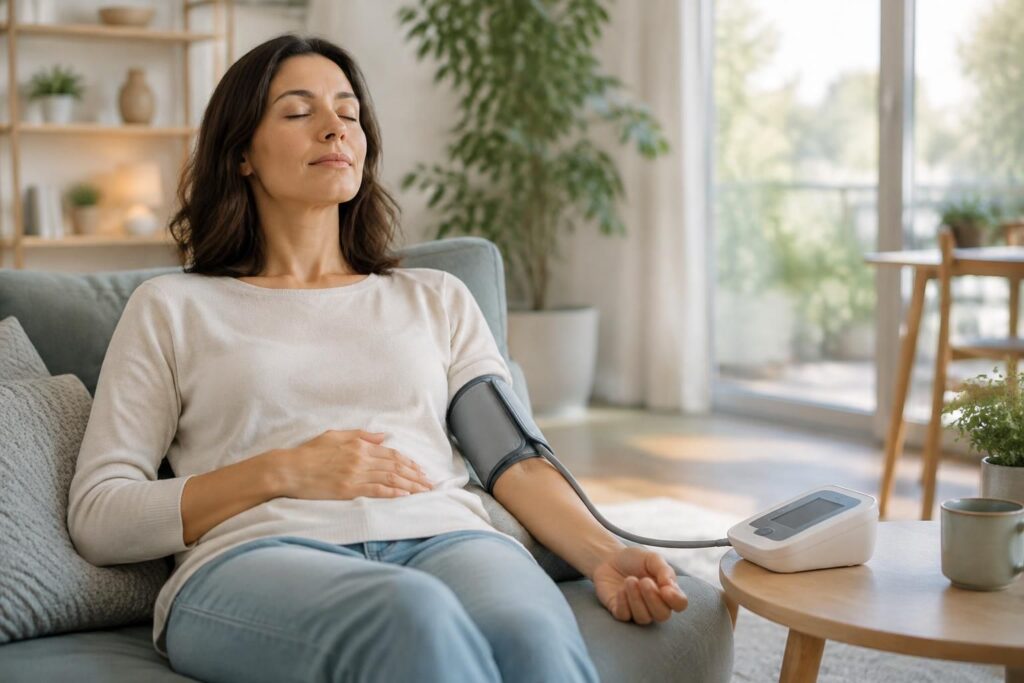
Slow breathing or a short meditation can reduce the sense of urgency and help the body relax. But feeling calm does not prove that your blood pressure has gone down: only a properly taken measurement can assess it.
Imagine Nora, finishing a tense meeting with her heart beating fast. A few minutes of relaxation can help her regain her composure; if she is monitoring high blood pressure, she should follow her healthcare professional’s instructions for measuring it rather than relying on how she feels.
Quick relaxation or lasting well-being: which should you choose?
Deep breathing and cardiac coherence can offer simple ways to slow down and focus on your breath. Muscle relaxation is more about noticing and then releasing tension, while mindfulness invites you to observe your thoughts without trying to push them away.
Guided visualization can also provide a brief mental break. No method works for everyone: choose one that feels pleasant and is easy to repeat, without forcing yourself to breathe deeply.
| What you need right now | Possible approach | Keep in mind |
|---|---|---|
| Regain your composure quickly | Gentle exhalation and attention to your breath | Stop or adjust if you feel unwell |
| Release tension | Gradual muscle relaxation | Do not tense a painful area |
| Build a habit | A short, regular practice | Consistency matters more than a perfect session |
| Check your blood pressure | Measure it according to medical instructions | Relaxation alone is no substitute for monitoring |
A 3-step process to ease the pressure
The best approach is to calm the present moment, then observe what is happening. Here’s a simple process to try, without treating it as a promise of treatment.
- Settle into a steady posture. Sit comfortably, place your feet on the floor, and let your shoulders drop. Breathe at your own pace for one to two minutes.
- Choose just one technique. Gently lengthen your exhale, relax your muscles, or focus on the sensations around you. A short, comfortable practice supports better stress management than a forced exercise.
- Check what you need. Notice whether you feel more settled, then address the concrete cause: take a break, ask for help, or tackle a task one step at a time. To reduce blood pressure, follow the advice of a healthcare professional.
If stress keeps coming back, a brief routine can support lasting well-being, but it is no substitute for medical advice or prescribed treatment. Chest pain, significant shortness of breath, or feeling faint require urgent medical attention.
Frequently asked questions about relaxation techniques
How long does it take to relax?
Some people feel calmer after a few minutes, but responses vary. Start with a short, comfortable practice, then notice how you feel.
Can relaxation lower blood pressure?
It can help you feel calmer, but how you feel cannot confirm that your blood pressure has gone down. To assess it, take a measurement according to your healthcare professional’s instructions.
What should I do if deep breathing makes me uncomfortable?
Don’t force yourself to take deep breaths. Return to natural breathing, or try relaxing your shoulders and hands instead.
Which technique should I choose for a quick break?
Choose a simple method you can practice comfortably: gentle exhalation, muscle relaxation, or paying attention to the sensations around you.
I hope you found these tips helpful. See you soon! — Patrick