
Hi, it’s Patrick.
To unwind at home, combine slow breathing, a movement that relaxes your body, and a few minutes away from screens.
You don’t need any equipment or a long session: choose an easy tip you can repeat, then adapt it to your energy level in the moment. The goal isn’t to do everything perfectly, but to give your body a real break.
Try this now
- Slow your breathing: breathe in gently, then breathe out a little longer, without forcing it.
- Relax your shoulders: raise them toward your ears, then let them drop three times.
- Put your phone away: set it aside for five minutes.
- Choose a calming sound: play some soothing music at a low volume.
- Drink a few sips of water: take this moment without checking your notifications.
If you’re unsure whether to practice sitting or lying down, check out these relaxation exercises based on your position; if you’re looking for a method to try, these stress-relief exercises offer some other simple ideas.
The trap to avoid: waiting until you’re at your limit
Relaxation isn’t only useful for calming a major bout of stress. Taking a short break before you’re exhausted is often easier to fit into your day and can help you notice tension before it sets in.
Imagine Léa, who ends her day with a clenched jaw and raised shoulders. Rather than looking for the perfect session, she takes a few minutes to breathe and relax her body: this small, regular practice becomes her stress-relief routine.
10 relaxation tips to try at home
1. Gently lengthen your exhale
Sit down with your feet on the floor. Breathe in calmly, then let the air out a little more slowly for one to two minutes.
Deep breathing shouldn’t turn into a forced inhale. If you feel dizzy, return to your natural breathing: comfort comes before performance.
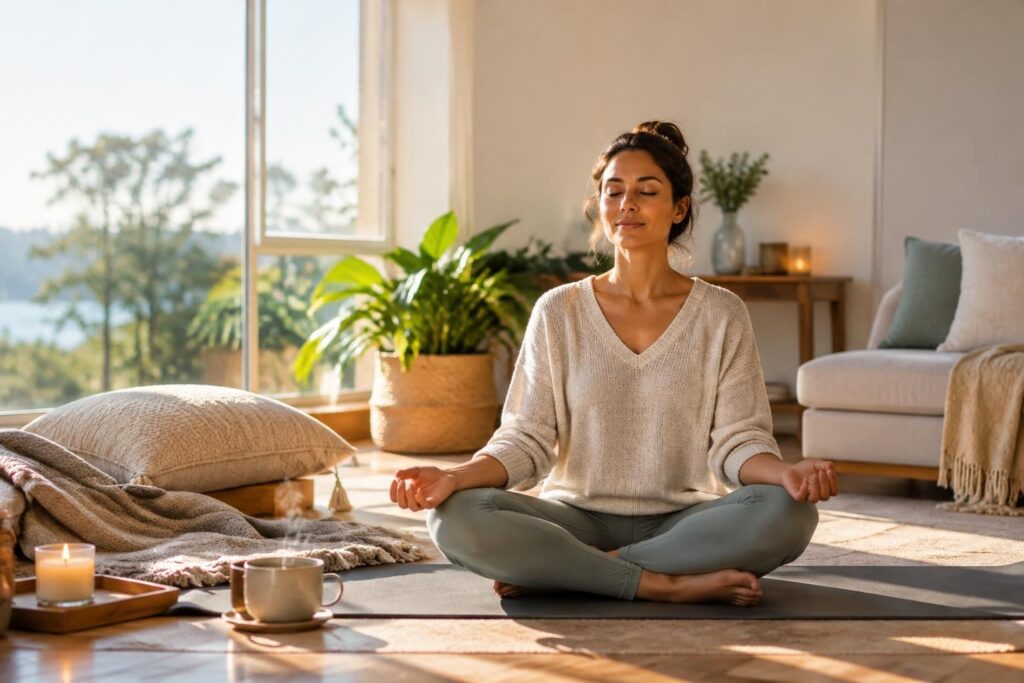
2. Try a short meditation
Focus your attention on a simple point of reference: the feel of your feet on the floor, the sounds in the room, or the movement of your belly. When a thought comes up, notice it, then gently return to that point of reference.
Two or three minutes is enough to get started. The idea isn’t to empty your mind, but to step out of autopilot for a moment.
3. Release your muscles step by step
Progressive muscle relaxation involves briefly tensing a group of muscles, then relaxing it. Start with your hands, then move on to your shoulders and face, avoiding any painful tension.
This alternation can make tension easier to notice. It can be especially helpful after a long day spent in front of a screen.
4. Choose gentle stretches
Slowly roll your shoulders and stretch your arms without jerking. For your neck, keep the movements small and stop if any movement causes pain.
A few comfortable movements are better than an intense stretch. The aim is to feel more at ease, not to force your flexibility.
5. Try self-massage
Gently massage your palms, forearms, or the soles of your feet with your fingers. Light, steady pressure is enough; avoid any injured or painful areas.
Pairing this movement with a slow exhale turns an ordinary self-care moment into a mindful break. You can also use a soft ball to massage the sole of your foot, without pressing hard.
6. Take a warm bath safely
A warm bath can help create a transition between the busyness of the day and rest. Keep the water at a comfortable temperature; a few minutes may be enough.
Avoid baths that are too hot or too long, especially if you feel weak or dizzy. A calm, lukewarm shower can be just as soothing.
7. Use visualization
Close your eyes if that feels comfortable and imagine a familiar place where you feel good: a garden, a quiet beach, or a corner of a forest. Add a sensory detail, such as the sound of leaves or the warmth of the sun.
This visualization gives your attention a pleasant anchor. If mental images don’t come easily, simply focus on a real sensation in the room.
8. Put on some soothing music
Choose a slow song or gentle sounds, then keep the volume low enough that you don’t have to compete with the music. You can listen for a few minutes without doing anything else.
Everyone has different tastes: music that relaxes one person may annoy another. Stick with what soothes you and change tracks if your body still feels tense.
9. Practice yoga at home
A few simple poses, such as child’s pose or a comfortable seated position, can go along with calm breathing. Use a mat or a blanket, and keep the movements gentle.
If a pose causes pain, come out of it right away. For your first session, it’s better to choose a beginner-friendly guided practice than to improvise challenging movements.
10. Create a realistic stress-relief routine
Pair a technique with something already in your day: breathe after shutting down your computer or stretch before going to bed. Start with five minutes, then keep only what genuinely helps you.
A useful routine should stay simple and flexible. It doesn’t have to be the same every day to become a helpful touchpoint.
Which relaxation technique should you choose for the moment?
The best tip is often the one you can use without putting extra pressure on yourself. This table can help you choose a starting point based on how you’re feeling.
| Moment or need | Tip to try | Suggested duration |
|---|---|---|
| Tension in your shoulders | Gentle stretches or muscle relaxation | 2 to 5 minutes |
| A restless mind | Meditation or visualization | 3 to 5 minutes |
| Need to unwind after work | Soothing music and slow breathing | 5 minutes |
| Want an evening ritual | Warm bath or self-massage | As long as feels comfortable |
| Stiff body after a day of sitting | Yoga at home or gentle movements | 5 to 10 minutes |
A simple three-step method to unwind
- Notice what’s going on: see whether the tension is mostly in your breathing, muscles, or thoughts. This helps you avoid choosing a practice at random.
- Choose just one tip: try it for a few minutes in a comfortable position. Don’t try to combine all ten techniques at once.
- Notice the effect: ask yourself whether you feel a little calmer or more relaxed. If the practice doesn’t suit you, simply try another one.
Relaxation doesn’t always happen right away, and that’s not a failure. A comfortable practice you repeat is more useful than an intense effort that adds pressure.
Frequently asked questions about relaxing at home
How long does it take to relax?
A few minutes may be enough to take a break and feel a little calmer. The amount of time varies from person to person and from moment to moment: start with two to five minutes without expecting immediate results.
Which technique should I choose when stress starts to build?
First, try slow breathing or relaxing your shoulders. Choose a comfortable method and stop if it makes you feel unwell or increases your tension.
Can I do relaxation exercises every day?
Yes, as long as the practice feels pleasant and suits how you’re feeling. A short, regular routine may be easier to maintain than a long session every now and then.
What should I do if none of the tips work?
Try another approach, shorten the time, or simply take a quiet break. If stress persists, seriously disrupts your daily life, or comes with worrying symptoms, seek advice from a health professional.
I hope you’ve found these tips helpful. See you soon! — Patrick