
Hi, it’s Patrick.
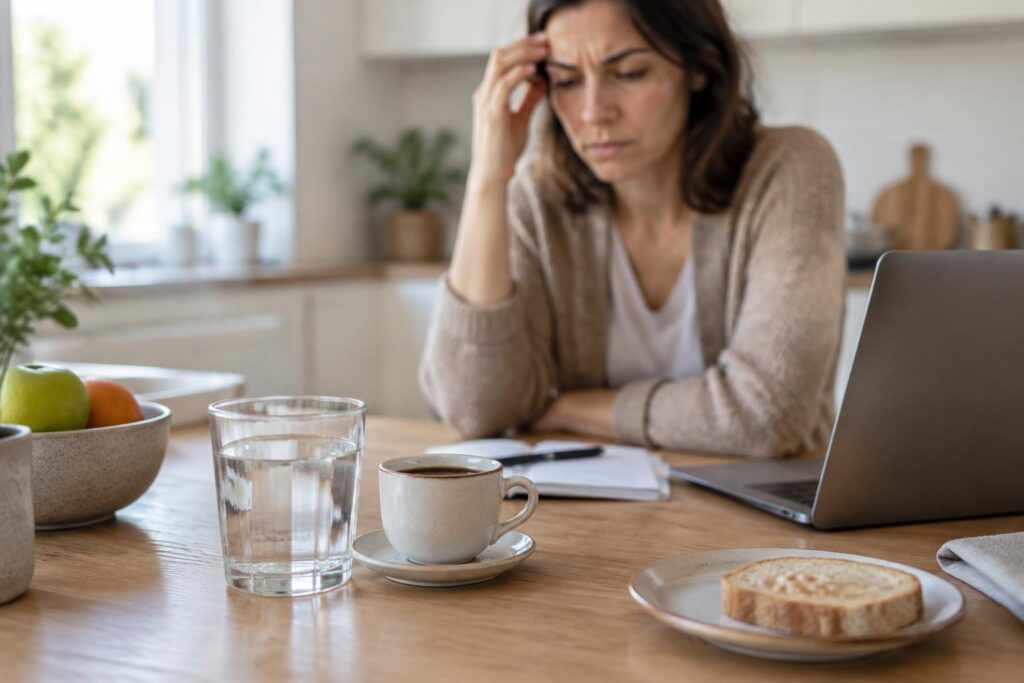
Yes, some coffee drinks can contribute to stress, especially if they’re very sugary, consumed late in the day, or don’t agree with you.
But black coffee isn’t automatically to blame for anxiety. The amount, timing, and your sensitivity to caffeine matter more than the “coffee” label.
A small study published in 2026 also suggests that coffee, even decaf, could affect the gut microbiome and certain aspects of mood. These findings are interesting, but they don’t prove that coffee treats stress.
Good habits to limit coffee’s effect on stress
- Notice how you feel after a cup: nervousness, palpitations, or restlessness are signs to take seriously.
- Cut back if you feel tense, rather than adding sugar to soften the taste.
- Avoid coffee late in the day if you’re a light sleeper.
- Compare regular coffee with decaf to identify how caffeine affects you.
- Take a few slow breaths and drink a glass of water if you feel jittery after your cup.
Stress can also show up in your stomach: these tips on nutrition when your body is under stress and on signs that it’s time to take action against stress can help you make sense of what you’re noticing.
Sweetened coffee, black coffee: the issue is often how it’s prepared
Plain coffee contains very few calories. Indulgent coffee drinks, on the other hand, can contain a lot of sugar and fat: their sweet taste can sometimes mask a substantial amount of caffeine.
Sugar alone doesn’t turn coffee into a definite source of chronic stress. However, a very sugary, caffeinated drink can intensify feelings of stimulation in some people, while drinking coffee late can interfere with sleep. And disrupted sleep often makes stress harder to manage.
| Type of drink | Approximate sugar and calories | Keep in mind |
|---|---|---|
| Filtered black coffee | 0 g added sugar, about 2 to 5 kcal | Caffeine can still cause restlessness or nervousness in people who are sensitive to it. |
| Espresso with a teaspoon of sugar | About 5 g of sugar | The amount of caffeine depends on the coffee and how it’s prepared. |
| Large flavored drink | Sometimes more than 30 g of sugar and several hundred kcal | The recipe and serving size can make the values vary considerably. |
These figures are estimates, not universal values. If you’re monitoring your intake, check the recipe or label: a large size can make a significant difference.
What the 2026 study reveals about coffee and mood
Researchers at the University of Cork followed 31 regular coffee drinkers and 31 people who didn’t usually drink coffee. After the regular coffee drinkers went without coffee for two weeks, participants resumed drinking either caffeinated or decaffeinated coffee.
The researchers observed changes in certain gut microbiome metabolites. In this small group, decaffeinated coffee was associated with findings related to learning and memory, while caffeinated coffee was associated with greater alertness and less anxiety. These are associations observed in a limited study, not a guarantee of an effect for every person.
So caffeine isn’t the whole story: coffee also contains compounds such as polyphenols, which could play a role in its interactions with the microbiome. As for cortisol, responses vary depending on the dose, timing, and habits; it would be an overstatement to conclude that a cup of coffee necessarily causes a sustained increase in this hormone.
A three-step process for adjusting your coffee intake
- Track what you drink for a week. Write down the time, type of drink, and how you feel afterward, especially any anxiety, palpitations, or difficulty falling asleep.
- Test one change at a time. Reduce the amount or replace one cup with decaf. Avoid changing several habits at once so you can better understand your sensitivity to caffeine.
- Choose a routine that works with your sleep. If late coffee seems to bother you, have your last cup earlier. Gradually cutting back can also help limit headaches caused by stopping abruptly.
There isn’t necessarily one number that works for everyone: the right amount is one that doesn’t trigger symptoms or disrupt your sleep. If anxiety or palpitations persist, ask a healthcare professional for advice.
Frequently asked questions about coffee and stress
Does coffee always cause anxiety?
No. The effect depends in particular on the amount, the time of consumption, and individual sensitivity to caffeine.
Can decaf also affect mood?
The study conducted in Cork observed microbiome-related changes with both types of coffee. It associated decaf with certain findings on learning and memory, without proving a general benefit.
Does coffee increase cortisol?
Responses can vary depending on the person and the circumstances. The data presented do not allow us to claim that moderate consumption causes a sustained increase in cortisol.
What time should you stop drinking coffee?
There is no universal cutoff time. If coffee interferes with you falling asleep, try having your last cup earlier and observe how it affects your sleep.
I hope you found these tips helpful. See you soon! — Patrick