
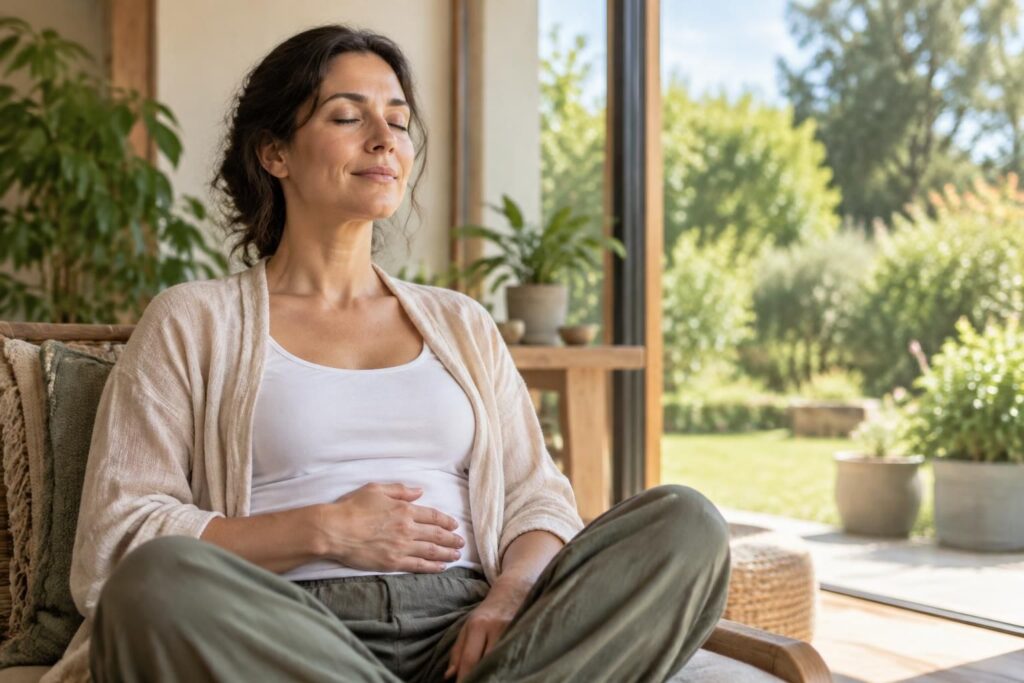
Hello, Patrick here. Relaxation techniques can really help reduce stress, but they are not a substitute for medical support when distress persists. Their effect depends mainly on consistency, the method you choose, and each person’s situation. The goal is not to make all tension disappear, but to learn how to respond to it better.
Try this right away
- Slow your breathing for one to two minutes, without forcing your inhale.
- Relax your jaw and shoulders, then place your feet on the floor.
- Step away for a few moments from the screen or the source of tension.
- Choose a simple practice: deep breathing, a gentle walk, or a short quiet break.
- Rate your stress level before and after, on a scale from 0 to 10.
To explore other practical steps, check out these natural ways to calm restlessness and also learn how maca is presented as a source of support for stress.
The pitfall: expecting relaxation to erase all your stress
A relaxation technique is not an “off” switch. It can ease restlessness and help the body regain a little calm, but it cannot, on its own, resolve an excessive workload, a conflict, or ongoing anxiety.
Take Lina, who ends her days with tense shoulders. A three-minute breathing break can help her wind down after a difficult meeting. If her stress remains intense, disrupts her sleep, or persists over time, it is also important to seek support from a professional.
Which method should you choose for your needs?
Deep breathing is accessible when tension rises. Mindfulness meditation instead trains your attention to stay in the present moment, while progressive muscle relaxation involves tensing and then releasing different muscle groups.
Heart coherence generally relies on a regular breathing rhythm. It works for some people, but no rhythm should be imposed: if you feel dizzy or uncomfortable, return to your natural breathing.
| Technique | When to try it | Point to keep in mind |
|---|---|---|
| Deep breathing | When tension starts to rise | Do not force your breathing |
| Mindfulness meditation | To train your attention, a few minutes at a time | A short practice is still worthwhile |
| Progressive muscle relaxation | When your body feels tense | Avoid tensing a painful area |
| Heart coherence | To establish a regular breathing rhythm | Adjust the rhythm to what feels comfortable |
A guided video can help you follow a rhythm, but it cannot guarantee the same effect for everyone. Feel free to pause or return to your usual breathing.
The benefits of relaxation: useful, but variable
The benefits of relaxation may include a feeling of calm, steadier attention, or a better awareness of bodily tension. The effectiveness of stress-relief methods varies depending on the person, the context, and how consistently they practice: it is better to observe your own experience than to believe in a promise that applies to everyone.
Myths about relaxation sometimes create unrealistic expectations: that you have to clear your mind, succeed from the first session, or relax immediately. In reality, noticing that your mind is wandering is already part of the exercise. Natural stress remedies can complement a routine, but they do not replace medical advice if symptoms persist.
A simple three-step process
- Notice the signal. Pay attention to what is happening in your body: shallow breathing, tense shoulders, or racing thoughts.
- Try a practice for a few minutes. Try comfortable breathing or gradual relaxation, without aiming for perfection.
- Assess the effect and adjust. If the method increases your discomfort, stop and choose a gentler option. If stress becomes overwhelming or persistent, ask a healthcare professional for advice.
Consistency matters more than one spectacular session: repeating a few minutes of practice can help you notice signs of tension sooner and respond to them more calmly.
An audio guide can help you through your first progressive muscle relaxation sessions. Choose a voice and pace that suit you, without treating the session as a treatment in itself.
Do relaxation techniques really work?
They can help some people manage tension better, but their effects vary. They do not replace medical care when stress is intense or persistent.
How long should I practice?
Start with a few minutes, for example two to five, then adjust according to your comfort. A short, regular practice is often more realistic than a long, occasional session.
What should I do if deep breathing makes me uncomfortable?
Do not force your breathing. Return to your natural breathing, open your eyes if needed, and try a gentle walk or softly relaxing your shoulders instead.
Can relaxation replace treatment for anxiety?
No. It can be a complement, but it does not replace a diagnosis or treatment recommended by a healthcare professional.
Thanks for reading! If this topic resonates with you, share your experience in the comments. — Patrick