
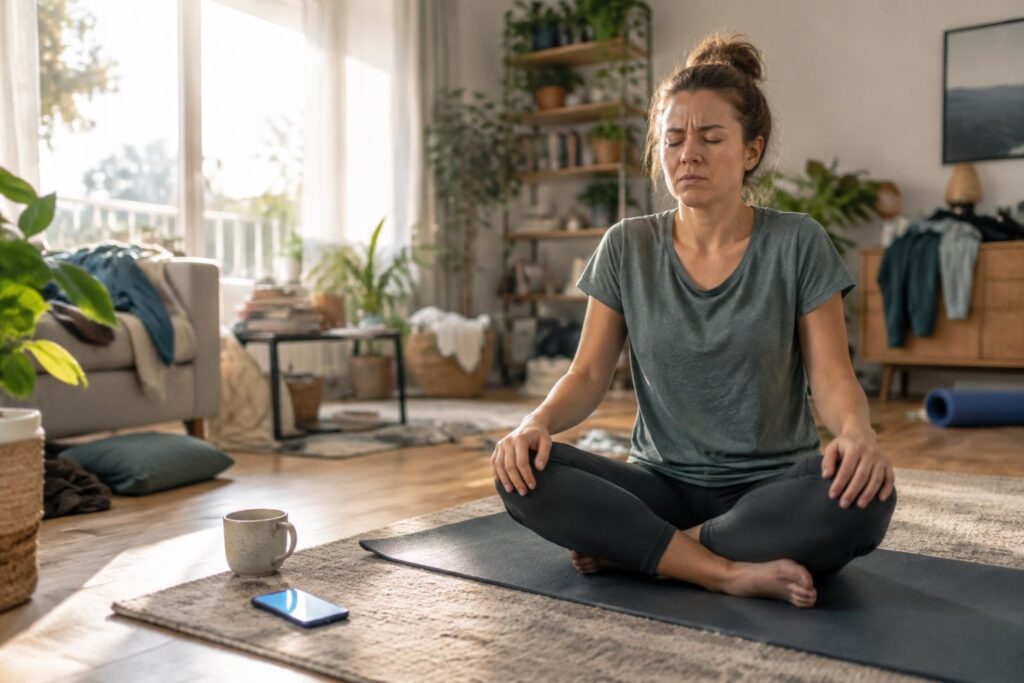
Introduction
Hi, Patrick here. To stay calm, avoid six pitfalls: distractions, a lack of routine, hurried breathing, overly ambitious sessions, comparison, and ignoring your sensations. A few minutes are often enough to regain a little breathing room, as long as you choose a practice that suits you. These relaxation techniques don’t require you to get everything right: they help you gently return to the present moment.
Things to do right now:
- Choose a place where you can sit quietly for a few minutes.
- Put your phone away or turn off its notifications.
- Relax your shoulders and unclench your jaw.
- Take a few slow breaths without forcing them.
- Choose one simple exercise rather than doing several methods in a row.
Try this right away: choose just one of these actions for today, then notice what changes in your body. To identify the most common relaxation mistakes, read these tips on effective relaxation and these suggestions for finding calm in just a few minutes.
Six mistakes that keep relaxation from working
Stress management isn’t about having a perfect session. It often starts with small adjustments that fit your daily life and your energy at the time.
1. Keeping too many distractions around you
A noisy space, bright light, or notifications can draw your attention back to the outside world. Choose a reasonably quiet place and dim the lights if you can. There’s no need to create a special setting: a few minutes without a screen can already make it easier to regain a sense of inner calm.
2. Waiting for the right moment instead of establishing a routine
If relaxation only happens when you’re already at your limit, it may feel hard to achieve. Set aside a short time at an hour that works for you: after waking up, during a break, or before bed. A regular practice lasting a few minutes is often easier to stick with than a long session once in a while.
3. Forgetting mindful breathing
When your breathing becomes shallow or quick, your body may stay tense. Instead, try breathing in gently, then letting your exhale lengthen without holding your breath. Mindful breathing doesn’t need a strict rhythm: if counting makes you tense, simply let your breath slow at its own pace.
This quote sums up the idea nicely: “Gentleness is also a way of moving forward.” The goal isn’t to control every breath, but to give it a little more room.
4. Trying to do everything in one session
Doing meditation, stretching, and complex exercises one after another can turn a break into another task to complete. Start with one short, accessible practice. Muscle relaxation can be as simple as relaxing your shoulders or gently stretching your back, without trying to achieve anything.
5. Comparing your experience with other people’s
One person may enjoy seated meditation, while another may prefer walking or listening to a guided relaxation. If your mind wanders, it doesn’t mean you’re failing: simply bring your attention back to your breath, the sounds, or your sensations. Mindfulness takes shape in your own way, without comparison.
6. Ignoring your body’s signals
Staying still despite discomfort or restlessness can make a break unpleasant. Change position, stretch gently, or take a few steps if your body asks you to. Effective relaxation respects your limits; it doesn’t require you to force yourself to stay still.
Here’s an example: Lina sat down to meditate every evening, but tensed up whenever she tried to stay perfectly still. By sometimes replacing the session with a slow walk, she found a practice that was easier to return to.
A simple three-step method
- Step 1: Put your phone aside and choose a comfortable position, sitting or standing.
- Step 2: For a few minutes, observe your breath and relax one tense area with each exhale.
- Step 3: Before returning to your activities, notice whether your body or attention has changed, even slightly.
If it’s mainly your mind that’s restless, follow a few breaths or a guided meditation. If your body feels tense, do a few gentle movements or walk for a little while: the key is to adapt the practice to what you need in the moment.
This short video can help you discover a guided routine, without any need to follow every instruction to the letter.
Identify the obstacle and choose an appropriate response
| What’s getting in the way | What you can try | Helpful tip |
|---|---|---|
| Noise and notifications | Put your screen away and choose a quieter place | Reduce interruptions |
| Breathing too quickly | Gently lengthen your exhale | Don’t hold your breath |
| Discomfort while sitting | Change position or walk slowly | Listen to your sensations |
| Frustration at not “succeeding” | Return to a simple exercise | Accept your thoughts without judging yourself |
These adjustments support mental well-being without imposing a one-size-fits-all solution. To explore other easy exercises, you can also check out these practices for when everything feels overwhelming.
Frequently asked questions about relaxation techniques
How much time should I set aside for a relaxation break?
Start with a few minutes, then adjust based on your schedule and how you feel. A short, regular practice is often easier to maintain.
Do I have to stay still to relax?
No. You can change position, stretch gently, or walk if staying still becomes uncomfortable.
What should I do if thoughts continue during meditation?
That’s common. Notice that your attention has wandered, then gently bring it back to your breath or sensations, without judging yourself.
Which technique should I choose to get started?
Choose a simple method that feels pleasant to you: slow breathing, gentle stretches, mindful walking, or guided meditation.
Thanks for your interest. See you soon; Patrick